
What Is a Motor Starter and Why Is It Important?

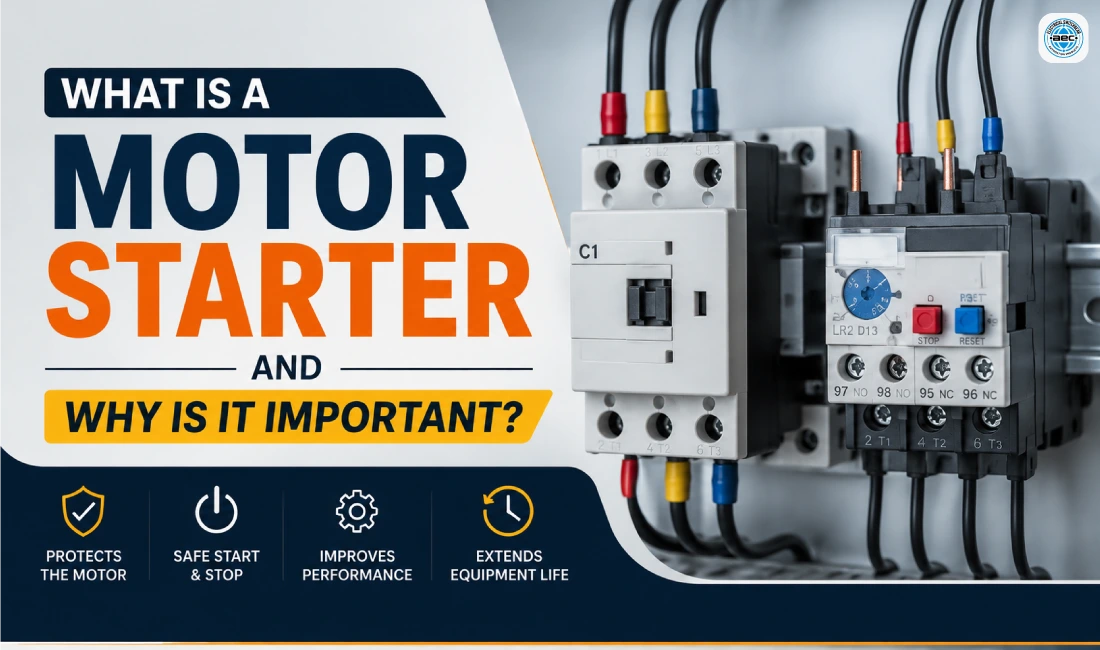
Electric motors are essential in industrial machines, pumps, compressors, conveyors, fans, HVAC systems, production equipment, and many other applications where reliable mechanical power is required. However, a motor cannot simply be connected to the electrical supply without considering the high current and electrical stress that occur during startup. A Motor Starter provides a practical way to control the starting and stopping of a motor while also supporting its protection during operation. It generally combines switching and overload protection so that the motor can be operated safely and consistently. Depending on the motor rating and application, different solutions such as DOL starters, star-delta starters, or soft starters may be used. Choosing the right equipment is particularly important in industrial environments because improper motor starting can lead to overheating, nuisance tripping, equipment damage, and unnecessary maintenance costs. For businesses looking for dependable industrial electrical products, AAR CEE Electrical offers electrical solutions designed for a range of industrial control and protection requirements.
What Is a Motor Starter and How Does It Work?
A Motor Starter is an electrical control device used to start, stop, and protect an electric motor by managing the connection between the motor and its power supply. Its basic purpose is more than simply switching electricity on and off; it helps provide controlled motor operation and protection against sustained overload conditions. A conventional starter generally includes a contactor, overload relay, and control circuit, while the complete installation may also include circuit breakers, fuses, isolators, push buttons, indicator lamps, and other protective equipment. When the start command is given, the control circuit energizes the contactor coil, causing the contactor to close its main contacts and supply power to the motor. When the stop command is pressed, or when the overload protection operates, the contactor opens and disconnects the motor from the supply. This arrangement allows high-power motors to be controlled using relatively low-power control circuits, which is especially useful in industrial control panels and automated machinery. The contactor acts as the main switching component of a Motor Starter. Instead of requiring an operator to manually handle the motor’s full load current, the contactor allows the motor circuit to be switched electrically through a control signal. The overload relay monitors the motor’s operating current and responds when the motor remains overloaded for a sufficient period. This is important because excessive current can cause the motor windings to heat up, potentially reducing insulation life and damaging the motor if the condition continues. The control circuit provides the interface through which operators or automation systems can start and stop the motor using push buttons, selector switches, sensors, timers, PLCs, or other control devices. In this way, the Motor Starter becomes an important link between the electrical supply, control system, protection equipment, and motor. Motor starters are particularly important because electric motors normally draw a significantly higher current when they first begin rotating than they do during normal operation. The exact starting current depends on the motor design and starting method, but it can be several times the normal running current. If this current is not properly considered, it may create voltage dips, unnecessary breaker operation, heating, or mechanical stress. A suitable Motor Starter helps the electrical system manage the starting process according to the requirements of the motor and connected load. For larger or more demanding applications, reduced-voltage starting methods can further improve starting performance. Another important point is that a Motor Starter should not be considered a replacement for every type of electrical protection. Short-circuit protection, earthing, isolation, phase protection, and other safety requirements may require additional equipment depending on the installation. The starter should therefore be selected as part of a complete motor-control and protection system. Proper sizing of the contactor and overload relay is also essential because selecting equipment without considering the motor’s rated current, voltage, duty, starting conditions, and load characteristics can compromise reliability. For industrial users, contractors, panel builders, and machine manufacturers, choosing quality electrical components can make a significant difference in long-term performance. AAR CEE Electrical focuses on industrial electrical products and electrical control solutions, making it a useful source for businesses that need dependable components for motor-control and industrial applications. Visit AAR CEE Electrical to explore its product range and electrical solutions.
Key Benefits of Using a Motor Starter
- Provides a controlled method for starting and stopping electric motors.
- Helps protect motors against sustained overload conditions.
- Allows high-current motor circuits to be operated through suitable control circuits.
- Supports safer operation of industrial machinery.
- Can reduce unnecessary electrical and mechanical stress during motor starting when an appropriate starting method is selected.
- Makes motor operation easier to integrate with automation systems and control panels.
- Helps improve the reliability and service life of motor-driven equipment when correctly selected and maintained.
The right Motor Starter ultimately depends on the application. A small motor driving a light mechanical load may require a straightforward DOL arrangement, whereas a larger motor or a system sensitive to starting current may require star-delta starting or a soft starter. Understanding these differences is the next step toward making an informed motor-control decision.
Types of Motor Starters and Their Applications
The type of Motor Starter required for an application depends mainly on the motor’s power rating, starting current, mechanical load, available electrical capacity, and the level of starting control required. A starter that works well for a small water pump may not be suitable for a large industrial conveyor or compressor because different loads place different demands on the electrical system. DOL starters, star-delta starters, soft starters, and other motor-control arrangements are selected according to these operating conditions rather than simply choosing the most advanced option available. Understanding the differences helps businesses avoid unnecessary costs while ensuring dependable motor performance. In industrial installations, the starter should also be coordinated with circuit protection, overload settings, cable sizing, contactor ratings, and the motor’s nameplate specifications. A correctly selected starter can provide straightforward operation for simple machines or more controlled starting for equipment where current and mechanical stress need to be managed carefully. A Direct-On-Line (DOL) starter is one of the simplest and most commonly used motor-starting arrangements. It connects the motor directly to the electrical supply through a contactor when the start command is activated. Because the motor receives full supply voltage immediately, it can produce strong starting torque, but it also draws a comparatively high starting current. DOL starters are therefore generally suitable where the motor is relatively small or where the electrical system and connected equipment can accommodate the starting current. They are commonly found in pumps, fans, compressors, machine tools, and other applications where simple ON/OFF motor control is sufficient. A typical DOL Motor Starter includes a contactor, overload relay, start/stop controls, and appropriate upstream short-circuit protection. A star-delta starter provides an alternative starting method for suitable three-phase motors. Instead of initially applying the motor’s normal delta connection, the motor begins in a star configuration and subsequently changes to delta once it has accelerated. This reduces the starting current compared with direct-on-line starting, although it also reduces the starting torque during the initial phase. Star-delta starting can therefore be useful for certain larger motors and loads where limiting starting current is important. However, the motor must be correctly designed and connected for this method, and the transition between star and delta needs to be properly controlled. Incorrect selection or application can result in poor acceleration, excessive switching stress, or unsatisfactory motor performance. A soft starter uses electronic control to gradually increase the voltage supplied to the motor during startup rather than applying full voltage instantaneously. This can provide smoother acceleration and help reduce sudden mechanical stress on shafts, couplings, belts, gearboxes, pumps, and other connected equipment. Soft starters can be particularly useful where sudden acceleration causes water hammer in pumping systems or unnecessary mechanical shock in conveyor and material-handling equipment. They can also help reduce the impact of starting current on the electrical supply. However, a soft starter is not automatically the best solution for every motor; the application, motor characteristics, load profile, required starting torque, and control requirements should all be considered before selection. For applications requiring variable motor speed as well as controlled starting, a variable frequency drive (VFD) may be considered instead of a conventional starter. A VFD can control motor speed and acceleration by varying the electrical frequency and voltage supplied to the motor. This makes it valuable in applications where process control, energy management, or adjustable operating speed is important. However, VFDs are more sophisticated than conventional starters and require appropriate consideration of motor compatibility, harmonics, cooling, cable arrangements, electromagnetic interference, and control requirements.
In practical terms, the choice can be summarized as follows:
Motor Starting Method | Main Advantage | Typical Use |
DOL Starter | Simple and economical starting | Smaller motors, pumps, fans, machines |
Star-Delta Starter | Reduced starting current | Suitable larger three-phase motors |
Soft Starter | Smooth acceleration and reduced mechanical shock | Pumps, conveyors, compressors, fans |
VFD | Starting plus variable-speed control | Process machinery, fans, pumps, automated systems |
There is no universal Motor Starter for every application. The correct choice should be based on the motor’s kW or HP rating, rated current, voltage, phase configuration, load characteristics, starting torque, number of starts per hour, and control requirements. For industrial users, selecting appropriately rated components from a reliable supplier is equally important. AAR CEE Electrical provides a range of industrial electrical products and motor-control solutions that can support different electrical control and protection requirements. You can learn more about its products and services through the official AAR CEE Electrical website.
Motor Starter Components and Protection Features
A reliable Motor Starter is made up of several electrical components that work together to provide controlled starting, stopping, and protection for the motor. The contactor handles the switching function, while the overload relay responds to sustained excessive current that could cause motor overheating. Depending on the application, the starter assembly may also work with a circuit breaker, fuse, isolator, control transformer, push buttons, selector switches, indication lamps, auxiliary contacts, and automation controls. Each component has a specific role, and the overall performance of the motor-control system depends on selecting components with compatible electrical ratings. This is especially important in industrial environments where motors may operate for long hours, start and stop frequently, or drive heavy mechanical loads. A properly designed Motor Starter helps create a more organized and dependable control system while making fault identification and maintenance easier for technicians. The contactor is one of the most important parts of a conventional Motor Starter because it provides electrically controlled switching of the motor’s power circuit. Its coil is operated through the control circuit, allowing a relatively small control signal to switch the higher current required by the motor. Contactors are available in different ratings and configurations, so the selection should consider the motor’s voltage, current, duty category, number of operations, and application. Using an incorrectly rated contactor can lead to contact wear, overheating, unreliable switching, or premature failure. For industrial machinery that operates frequently, the contactor must be capable of handling the expected switching duty rather than being selected only according to the motor’s nominal power. The overload relay provides another critical layer of protection. During normal operation, the motor draws current within its expected operating range, but mechanical problems, excessive loading, poor operating conditions, or other issues can cause current to remain above the appropriate level. The overload relay detects this sustained condition and trips the control circuit, causing the contactor to disconnect the motor. This helps prevent prolonged overheating of the motor windings. Overload protection is different from short-circuit protection, so a complete motor-control installation normally requires suitable upstream protective equipment as well. Correct adjustment of the overload relay according to the motor’s rated current is essential because an incorrectly set device may either trip unnecessarily or fail to provide the intended protection. A circuit breaker or fuse is generally used to protect the electrical circuit against short circuits and other high-current fault conditions. These devices serve a different purpose from the overload relay. A short circuit can create a very large current in a very short time, requiring fast interruption of the fault. The protective device must therefore be properly coordinated with the motor starter, cables, motor, and available fault current. Proper coordination is particularly important in industrial control panels because a fault in one motor circuit should be isolated as effectively as possible without unnecessarily disrupting unrelated equipment. The control circuit is what allows the Motor Starter to be operated conveniently and safely. It can include start and stop push buttons, emergency-stop arrangements, selector switches, auxiliary contacts, indicator lamps, sensors, timers, or PLC outputs. In a basic arrangement, pressing the start button energizes the contactor coil, while the stop button interrupts the control circuit. Auxiliary contacts can maintain the contactor’s energized state after the start button is released and can also provide feedback to control systems. In automated machinery, the same principle can be integrated with sensors and programmable controllers so that motors start or stop according to production requirements rather than requiring constant manual operation. Another useful feature in industrial motor-control systems is phase-related protection. Three-phase motors can be affected by phase loss, phase imbalance, or incorrect phase conditions. Such problems may cause abnormal current and heating and can reduce motor reliability if allowed to continue. Depending on the installation, additional motor-protection devices may be incorporated into the control panel to detect these conditions. The exact protection arrangement should be selected according to the motor, electrical system, operating environment, and applicable installation requirements. For this reason, purchasing a Motor Starter should not be treated as simply buying a contactor and overload relay separately without considering their compatibility. The motor rating, operating current, supply voltage, phase, starting method, load type, control voltage, enclosure requirements, and protection arrangement should all be reviewed before installation. AAR CEE Electrical can help businesses source industrial electrical products and motor-control components suitable for different electrical applications. Explore the available solutions at AAR CEE Electrical when planning your industrial electrical requirements.
How to Choose the Right Motor Starter?
Choosing the right Motor Starter starts with understanding the motor rather than selecting equipment based only on its physical size or horsepower. The motor nameplate provides important information such as rated voltage, full-load current, frequency, phase, power rating, and other operating details that influence starter selection. The type of mechanical load is equally important because a lightly loaded fan, a centrifugal pump, a conveyor, and a compressor can have very different starting requirements. Engineers and technicians should also consider how frequently the motor starts and stops, whether the electrical supply has sufficient capacity, and whether the application requires smooth acceleration or simple ON/OFF control. A properly selected starter should provide the required starting performance while working correctly with the motor’s protection and control system. For many smaller motors, a DOL Motor Starter can be a practical and economical choice because of its straightforward construction and easy maintenance. Where direct starting would create excessive current or mechanical stress, a star-delta starter or soft starter may be more appropriate. If variable speed is required, a VFD may offer greater control than a conventional starter. The decision should therefore be based on the actual operating objective: whether the priority is simplicity, reduced starting current, smoother acceleration, variable speed, energy management, or process automation. The motor’s rated current is particularly important when selecting the contactor and overload relay. The contactor must be suitable for the motor’s switching duty, while the overload relay must provide an appropriate adjustable range around the motor’s operating current. The control voltage should also match the available control circuit. For example, the requirements of a panel using a particular control voltage may differ from those of a system controlled directly by a PLC or automation device. Ignoring these details can result in nuisance tripping or unreliable starter operation. Environmental conditions should also be considered. A Motor Starter installed in a clean indoor electrical room may have different enclosure and protection requirements from one installed in a dusty factory, humid area, outdoor pump station, or industrial processing environment. Temperature, dust, moisture, vibration, and accessibility can all influence equipment selection and enclosure requirements. Proper cable termination, ventilation, earthing, isolation, and panel layout are also important for long-term reliability. Finally, the starter should be selected with future maintenance and serviceability in mind. Industrial equipment benefits from components that are easy to inspect, test, replace, and obtain when required. Choosing standardized, appropriately rated industrial electrical products can simplify maintenance and reduce unnecessary downtime. AAR CEE Electrical’s range of electrical and industrial products can be considered by businesses looking for reliable components for motor-control and electrical applications.
Motor Starter Applications, Benefits and Maintenance
A Motor Starter is used across a wide range of electrical and industrial systems where motors need reliable starting, stopping, and protection. In manufacturing plants, starters are commonly used for conveyors, pumps, compressors, blowers, fans, machine tools, mixers, material-handling equipment, and production machinery. In commercial and building services, motor starters can support HVAC equipment, water pumps, ventilation systems, and other motor-driven installations. The starting method becomes particularly important when the motor is large, starts frequently, or drives equipment that cannot tolerate sudden acceleration. A suitable starter can make day-to-day motor control simpler while helping reduce the effects of overloads and unnecessary operating stress. For this reason, selecting a Motor Starter should always consider the actual application rather than treating every motor as having identical starting requirements. One of the biggest benefits of using a Motor Starter is controlled motor operation. Operators can start and stop equipment from a convenient control station without directly switching the motor’s high-current circuit. This becomes even more useful when the starter is integrated with automation equipment such as PLCs, sensors, timers, or remote control systems. In a production environment, automated starting and stopping can help coordinate several machines and reduce manual intervention. The starter also provides a practical way to integrate overload protection into the motor-control circuit. When the overload relay detects a sustained abnormal current condition, it can interrupt the control circuit and disconnect the motor, helping reduce the risk of prolonged overheating. Another advantage is improved equipment reliability. Motors are often connected to mechanical systems containing bearings, belts, couplings, gears, pumps, fans, or conveyors. Sudden starting and stopping can place additional mechanical stress on these components. Where the application requires smoother acceleration, a soft starter can reduce the abrupt application of torque and help the driven equipment accelerate more gradually. In applications where direct starting is acceptable, a DOL starter can provide a straightforward and economical solution. The important consideration is matching the starting method to the motor and load. Motor starters also contribute to easier maintenance and troubleshooting. A properly arranged motor-control panel allows technicians to identify components such as the contactor, overload relay, control circuit, and protective devices more easily. If a motor trips repeatedly, technicians can investigate whether the cause is excessive mechanical loading, incorrect overload settings, voltage problems, phase-related issues, inadequate ventilation, or another electrical or mechanical fault. Repeatedly resetting a tripped starter without identifying the underlying cause is not a good maintenance practice because it may allow a developing problem to continue. Routine inspection can help maintain dependable Motor Starter performance. Electrical connections should be checked by qualified personnel for signs of looseness, overheating, or deterioration, while contactor contacts and overload devices should be inspected according to the manufacturer’s recommendations. Control buttons, indicator lamps, wiring, terminals, and protective devices should also be checked as part of appropriate maintenance procedures. Dust, moisture, excessive temperature, vibration, and poor enclosure conditions can affect electrical equipment, so the environment in which the starter is installed should also be considered. Any maintenance or testing involving electrical equipment should be performed by suitably qualified personnel following appropriate safety procedures and isolation practices. AAR CEE Electrical can be a valuable source for businesses searching for industrial electrical products, motor-control equipment, and electrical protection solutions. Instead of selecting components only by price, industrial buyers should consider product quality, electrical ratings, application suitability, availability, technical support, and long-term service requirements. You can explore the company’s product and electrical solutions through the AAR CEE Electrical website.
Common Motor Starter Selection Mistakes to Avoid
Selecting a Motor Starter without checking the motor’s actual electrical and mechanical requirements can create problems that may not appear immediately after installation. One common mistake is choosing a starter solely according to the motor’s horsepower or kilowatt rating while ignoring the motor’s full-load current, voltage, phase, starting characteristics, and duty. Another frequent issue is using an inappropriate starting method for the connected load. A DOL starter may be perfectly suitable for one application but may produce undesirable starting current or mechanical stress in another. Similarly, a star-delta starter should only be used where the motor and application are suitable for that method. Careful selection at the design stage can prevent many avoidable operating problems. Incorrect overload relay adjustment is another important issue. If the setting is too low, the motor may experience unnecessary trips during normal operation; if it is too high, the intended overload protection may be compromised. The correct setting should be determined according to the motor manufacturer’s information, applicable electrical requirements, and the actual installation. The contactor must also have an appropriate rating for the motor’s duty and switching requirements. Using undersized or unsuitable components can result in excessive heating, contact deterioration, or premature failure. Another mistake is overlooking the electrical supply and installation environment. The starter must be compatible with the available supply voltage and control voltage, while the complete circuit needs appropriate short-circuit protection, cable sizing, earthing, isolation, and enclosure arrangements. Industrial environments can also introduce dust, moisture, heat, vibration, or corrosive conditions that may influence equipment selection. A technically correct starter can still perform poorly if it is installed in an unsuitable environment or connected without proper protection and wiring practices. Businesses should also avoid choosing a Motor Starter simply because it is the cheapest option. The initial purchase price is only one part of the overall cost of an industrial electrical installation. Poor-quality or incorrectly selected equipment can lead to unexpected downtime, repeated component replacement, motor damage, production losses, and higher maintenance costs. A better approach is to evaluate the product’s suitability, quality, ratings, reliability, support, and expected service life together. AAR CEE Electrical can help industrial customers explore suitable electrical and motor-control products according to their application requirements.
Why Choose AAR CEE Electrical for Industrial Electrical Products?
For motor-control applications, the quality and suitability of electrical components can directly influence the reliability of the overall installation. AAR CEE Electrical focuses on industrial electrical requirements and provides products and solutions for applications where dependable electrical control and protection are important. When selecting a Motor Starter or related component, customers should consider the complete requirement, including motor rating, starting method, protection, control arrangement, installation environment, and compatibility with the existing electrical system. This application-focused approach is more useful than selecting a product based only on a catalogue description or price. It also helps ensure that the selected electrical components work together as part of a properly designed motor-control system. AAR CEE Electrical can be considered by industrial companies, electrical contractors, panel builders, machine manufacturers, maintenance teams, and businesses looking for electrical products for industrial applications. Its product-focused approach can support customers who require components for motor control, switching, protection, and related electrical systems. Before purchasing, users should provide accurate motor information and application details so that the appropriate equipment can be identified. For example, the motor’s kW/HP rating, voltage, phase, rated current, application type, starting frequency, and desired starting method can all influence the selection. The right Motor Starter is ultimately an investment in safe control, dependable operation, and equipment protection. Whether the application requires a basic DOL arrangement, a star-delta starting system, a soft starter, or a more advanced motor-control solution, correct selection and installation remain essential. AAR CEE Electrical can be explored for industrial electrical products and solutions that support these requirements. Visit the official AAR CEE Electrical website to learn more about the available product range.
FAQs
Have questions? We’ve answered some of the most common queries to help you understand the topic better.
Q1. What is a Motor Starter?
A Motor Starter is an electrical device or arrangement used to start and stop a motor while providing suitable control and, commonly, overload protection.
Q2. Why does a motor need a starter?
A starter provides controlled switching and helps protect the motor against sustained overload conditions. It also allows the motor to be operated through convenient manual or automated control circuits.
Q3. Which Motor Starter is best for a motor?
The correct starter depends on the motor’s power, rated current, voltage, phase, load characteristics, starting requirements, and control needs. DOL, star-delta, soft starters, and VFD-based solutions serve different applications.
Q4. Is a DOL starter suitable for every motor?
No. DOL starting applies full supply voltage immediately and can produce high starting current. It is suitable only when the motor, load, and electrical supply can accommodate this starting method.
Q5. How do I choose the right Motor Starter?
Start with the motor nameplate information, including kW/HP, voltage, phase, and rated current, then consider the load, starting frequency, starting current, control requirements, protection, and installation environment. For industrial applications, professional electrical guidance is recommended before installation.