Flexible Electrical Wire: Top Benefits & Features of Flexible Cables


Choosing the right Electrical Wire is essential for creating safe, efficient, and reliable electrical installations. Whether you are working with industrial machinery, electrical control panels, commercial equipment, or electrical assemblies, the quality and construction of the wire can influence installation convenience, performance, and maintenance requirements. Flexible electrical wires are designed to bend and route more easily than comparable solid-core conductors, making them a practical option for installations where space is limited or wiring needs to pass around components. They generally contain multiple fine copper strands covered with protective insulation, providing flexibility while maintaining the electrical connection required by the application. The correct wire must still be selected according to current capacity, voltage rating, insulation material, temperature limits, and installation conditions. For businesses, electricians, panel builders, and industrial customers looking for electrical wiring products, understanding these features helps make purchasing decisions more confidently. Flexible wiring can simplify the arrangement of conductors in compact enclosures and support convenient connections in suitable equipment. However, not every flexible wire is designed for continuous movement, outdoor exposure, or high-temperature environments, so checking the product specifications is essential before installation. At Aarcee Electrical, customers can explore electrical products for different wiring and industrial requirements, including the Flexible Wire Single Core product category. This guide explains the benefits, construction, applications, and selection considerations that can help you identify the right Electrical Wire for your project.
What Is Flexible Electrical Wire and What Are Its Main Benefits?
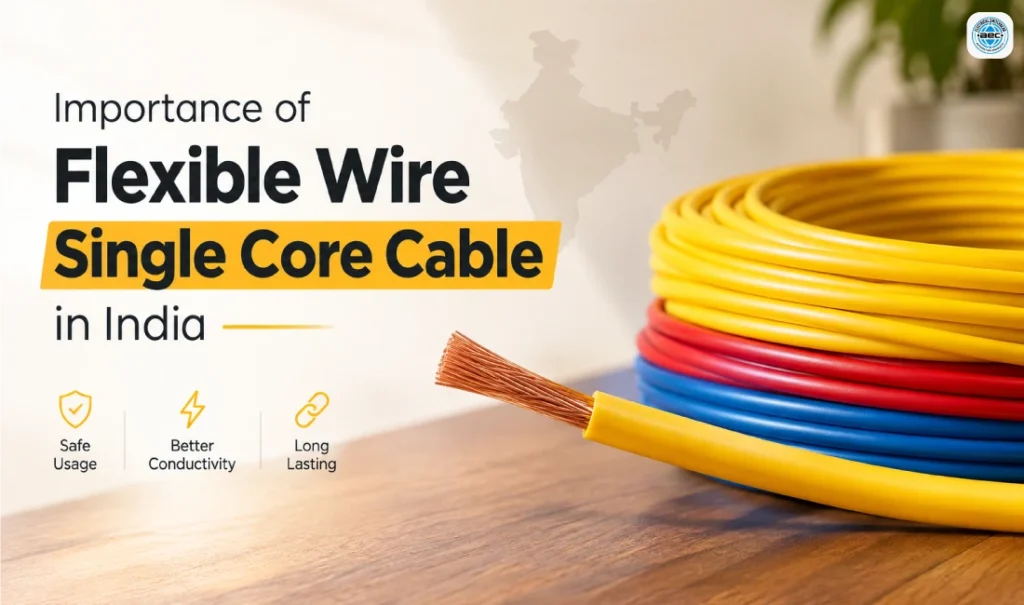
Flexible Electrical Wire is an electrical conductor manufactured to allow easier bending and routing during installation. Unlike solid-core wire, which uses one solid metallic conductor, flexible wire contains multiple smaller strands twisted together to form a conductor. Copper is commonly used because of its good electrical conductivity, while the surrounding insulation helps protect against unintended electrical contact and environmental influences. PVC insulation is widely used for general electrical applications, although other insulation materials may be selected when specific temperature, chemical, or mechanical properties are required. The flexibility of a finished wire depends on factors such as strand size, conductor construction, insulation material, and overall product design. One of the biggest benefits of flexible electrical wire is its ease of installation. In electrical panels, control cabinets, and equipment assemblies, conductors often need to pass through narrow spaces and around components. A flexible conductor can be easier to position and organise, helping installers create a neat wiring arrangement without forcing the wire into unsuitable bends. This is particularly helpful in installations containing relays, terminal blocks, controllers, power supplies, and other electrical components. Correct routing, suitable terminals, and proper strain relief are still important because flexibility alone does not prevent damage caused by sharp edges, excessive pulling, or incorrect installation. Another advantage is convenient handling during maintenance and equipment servicing. When technicians need to inspect connections, replace components, or reorganise a panel, flexible conductors can be easier to reposition than rigid alternatives. Using the appropriate wire can also help reduce installation-related stress caused by forcing conductors into tight spaces. However, the actual service life depends on electrical loading, installation quality, temperature, mechanical conditions, and the suitability of the insulation. Wires used in continuously moving machinery require specific consideration because a conductor that bends easily during installation may not be designed to withstand repeated flexing during operation. Flexible electrical wire is available in different conductor sizes, insulation types, and voltage ratings, allowing customers to select products according to their applications. Single-core flexible wire can be useful for suitable panel wiring, equipment connections, and electrical assemblies where individual insulated conductors are routed separately. For installations involving vibration, repeated movement, oils, chemicals, or outdoor exposure, the product must have appropriate ratings for those conditions. Choosing a wire based on its documented specifications rather than appearance alone helps support a safer and more reliable electrical system. To explore suitable options, visit the Aarcee Electrical Flexible Wire Single Core range and review the available product information.
Key Features and Common Applications of Flexible Electrical Wire
The construction of an Electrical Wire determines how it performs under different electrical and environmental conditions. One important feature is the conductor, which may consist of multiple fine copper strands that improve flexibility and make the wire easier to route. International standards such as IEC 60228 define conductor classes and requirements relating to conductor construction and electrical resistance. Classes 5 and 6 cover flexible copper conductors, with Class 6 offering greater flexibility under the standard’s classification. Nevertheless, the suitability of a complete wire depends on more than conductor class, including its insulation, finished construction, and intended application. You can consult the IEC 60228 conductor standard for further technical information. Insulation is another important feature because it protects the conductor and helps prevent accidental electrical contact. PVC is common in many general-purpose wiring products, while silicone rubber, thermoplastic elastomers, and other materials may be used for applications requiring particular thermal or environmental properties. Each material has different characteristics, so it is important to check the manufacturer’s stated operating temperature, voltage rating, and resistance to relevant environmental conditions. Not every flexible wire is suitable for oil exposure, harsh chemicals, outdoor use, or extreme temperatures. Similarly, voltage and temperature ratings vary by product and should never be assumed without checking the datasheet or product marking. Flexible Electrical Wire has applications across several sectors where practical routing and reliable electrical connections are required. In industrial control panels, suitable flexible conductors may connect relays, terminal blocks, controllers, and power supplies. In manufacturing environments, they may be used in electrical assemblies, machine control systems, and equipment wiring when their ratings match the application. Commercial equipment and certain electrical devices may also use flexible conductors for internal connections or other approved wiring arrangements. The correct choice depends on the load, the wiring method, the available installation space, and the protection required by the environment. Single-core flexible wire is particularly useful where individual conductors are installed separately within an appropriate enclosure or wiring system. It should not be confused with a multicore cable containing multiple insulated conductors under a common outer sheath. A single-core wire may be suitable for a control panel, but another application could require a complete cable with additional mechanical or environmental protection. Equipment exposed to continuous movement, such as robotic systems or cable carriers, may require a specialised continuous-flex cable rather than ordinary flexible installation wire. Before selecting a product, check the conductor size, insulation type, rated voltage, temperature limits, and any relevant compliance requirements. For electrical professionals and businesses searching for flexible wire in India, reviewing product specifications is an important step before purchasing. Aarcee Electrical provides a dedicated online category for Flexible Wire Single Core, giving customers a starting point for exploring suitable products. You can also visit the Aarcee Electrical homepage to discover more electrical product categories. Always compare the available product details with the requirements of your particular installation, especially where the wiring will carry significant current or operate under demanding conditions.
How to Choose the Right Electrical Wire for Your Project
Selecting the correct Electrical Wire begins with understanding the equipment and electrical load. Identify the operating voltage, expected current, conductor length, and installation method before deciding on the conductor size. An undersized conductor can overheat under excessive load, while voltage drop and installation conditions may also affect the selection. The correct cross-sectional area depends on several factors, including ambient temperature, the grouping of conductors, the way the wire is installed, and the applicable electrical regulations. For this reason, a wire should never be selected only by comparing its external thickness, flexibility, or price. Next, consider whether the wire will remain stationary or experience repeated movement. A suitable flexible wire may work well for stationary equipment connections and panel wiring, while continuously moving applications may require a cable specifically designed and tested for repeated flexing. Check the manufacturer’s information for conductor construction, minimum bending radius, operating temperature, voltage rating, and environmental suitability. Where vibration, moisture, oils, chemicals, or abrasion are expected, ensure the insulation and overall cable construction are appropriate for the conditions. Using a product outside its intended operating limits can lead to premature damage or electrical hazards. Installation quality is equally important. Flexible conductors should be routed without sharp bends, crushing, or unnecessary tension, and they should be secured with appropriate supports where required. Use terminals compatible with the conductor construction and follow the equipment manufacturer’s termination instructions. For finely stranded conductors, suitable ferrules or other approved termination methods may be necessary depending on the terminal design. Proper connections help reduce the risk of loose strands, unreliable contact, and overheating. Wiring should also be inspected periodically for cracked insulation, exposed copper, discolouration, loose terminals, and other signs of deterioration. If you are comparing electrical wiring products for an industrial or commercial project, make a checklist of the electrical load, conductor size, installation environment, flexibility requirements, and relevant safety standards. Review the available specifications before purchasing and consult a qualified electrician or electrical engineer when the application has unusual requirements. For demanding industrial equipment, high-temperature environments, or continuous-motion systems, professional assessment can help establish whether a standard flexible wire or a specialised cable is required. Choosing the correct product from the beginning can support easier installation, dependable performance, and more predictable maintenance. To explore available products, visit the Aarcee Electrical Flexible Wire Single Core category. You can use the product information to compare options with your project requirements and investigate other electrical products through Aarcee Electrical. Always confirm the exact ratings and suitability of the selected product before installation, and follow the applicable electrical regulations and manufacturer guidance.
Conclusion
Choosing the right Electrical Wire is essential for safe installation, reliable connections, and long-term electrical performance. Flexible electrical wire offers practical advantages, including easier routing, convenient handling, and simpler organisation in suitable control panels and equipment assemblies. Its performance depends on conductor construction, insulation material, wire size, operating ratings, and the conditions in which it is installed. For applications involving continuous movement or demanding environments, selecting a product specifically designed for those conditions is especially important. Reviewing product specifications and following proper installation practices can help reduce avoidable wiring problems and support dependable operation. If you are looking for suitable single-core wiring options for your electrical or industrial project, explore Aarcee Electrical and visit the Flexible Wire Single Core product category. Compare the available product information with your application requirements to make an informed selection.
FAQs
Have questions? We’ve answered some of the most common queries to help you understand the topic better.
Q1. What is flexible Electrical Wire used for?
It is used for suitable electrical panels, equipment connections, control circuits, and assemblies where easier routing and handling are required.
Q2. What is the difference between solid and flexible wire?
Solid wire has one solid conductor, while flexible wire contains multiple smaller strands that make bending and routing easier.
Q3. Can flexible wire be used in moving machinery?
Only when the wire or cable is specifically rated for the required movement, flexing cycles, and operating environment.
Q4. How do I choose the correct wire size?
Consider the current, voltage drop, conductor length, installation method, temperature, and applicable electrical regulations.
Q5. Where can I find flexible single-core wire from Aarcee Electrical?
Visit the Flexible Wire Single Core product category on the Aarcee Electrical website.