Photoelectric Sensors in Packaging and Sorting Equipment

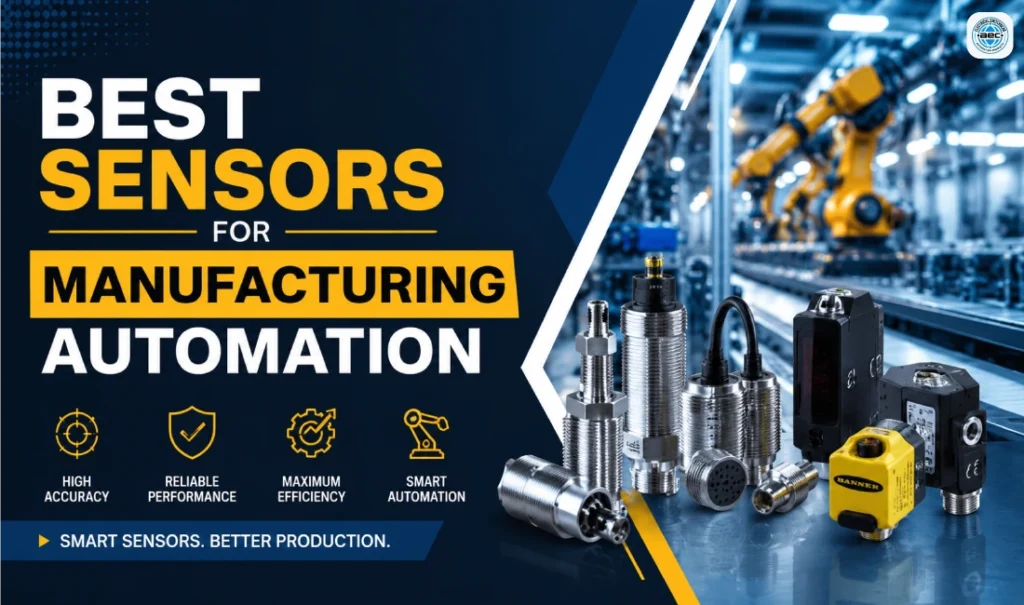
Photoelectric sensors play an important role in modern packaging, manufacturing, warehousing, and sorting operations by detecting objects without physical contact. These sensors use light to identify the presence, position, movement, or certain characteristics of products travelling through automated production lines. From detecting bottles before filling to counting cartons on conveyors and directing parcels towards designated sorting areas, photoelectric sensors help machines operate accurately and consistently. They are widely used in industries such as food processing, pharmaceuticals, electronics, cosmetics, logistics, and consumer goods manufacturing. Selecting the right sensor can help reduce detection errors, improve production flow, and minimise unnecessary machine stoppages. For businesses researching industrial automation components, understanding the working principles and applications of photoelectric sensors is an important step towards choosing reliable equipment for their operations.
What Are Photoelectric Sensors and How Do They Work?
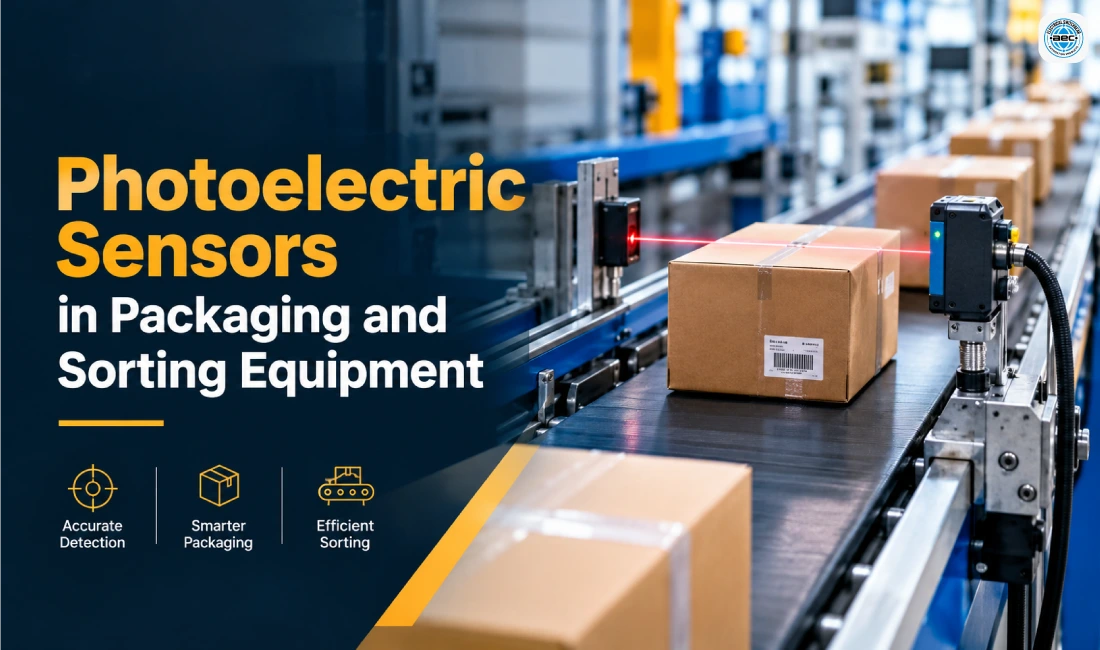
Photoelectric sensors are electronic devices that detect objects by transmitting and receiving light, usually infrared, visible red light, or laser light, depending on the sensor design. A typical sensor contains a light emitter, a receiver, and electronic circuitry that processes changes in the received light to determine whether an object is present. When a package blocks the light beam, reflects light towards the receiver, or changes the amount of light reaching the sensing element, the sensor generates an output signal. This signal can be connected to a programmable logic controller (PLC), relay, counter, or compatible automation system to trigger an action, such as stopping a conveyor or activating a filling mechanism. Unlike mechanical switches, photoelectric sensors can detect many products without touching them, making them useful for fragile packaging, fast-moving objects, and applications where physical contact could cause wear. Their performance depends on factors such as sensing distance, object colour, surface reflectivity, ambient lighting, mounting position, and response time. Businesses can explore industrial automation products through Aarcee Electrical when evaluating components for electrical control and automation applications. Three main sensing methods are commonly used in packaging and sorting equipment, and each offers different advantages depending on the application. Through-beam sensors use separate emitter and receiver units positioned opposite each other, detecting an object when it interrupts the beam; they are suitable for reliable detection over longer distances. Retro-reflective sensors combine the emitter and receiver in one housing and use a reflector on the opposite side, making installation convenient for many conveyor applications. Diffuse-reflective sensors detect light reflected directly from the target, eliminating the need for a separate reflector but making performance more dependent on the object’s surface and colour. Specialised models offer background suppression to distinguish targets from nearby machinery, transparent-object detection for suitable clear packaging, and contrast or colour sensing for specific inspection tasks. Choosing between these technologies requires considering the actual product, conveyor arrangement, available mounting space, and environmental conditions rather than selecting a sensor based on price alone.
Applications of Photoelectric Sensors in Packaging Equipment
Packaging equipment relies on accurate detection to coordinate operations such as filling, sealing, capping, labelling, counting, and product transfer. Photoelectric sensors confirm when bottles, cartons, pouches, trays, or containers reach the correct position, allowing the machine controller to perform the next operation at the appropriate time. For example, a sensor positioned near a filling station can detect an incoming bottle and send a signal to the control system, helping coordinate the filling cycle. On labelling machines, suitable optical sensors can detect containers or printed registration marks to support accurate label placement and packaging alignment. These applications are particularly valuable on high-speed production lines, where manual checking would be impractical and missed detections could interrupt production. Photoelectric sensors also support quality checks by detecting certain visible problems, such as missing packages, incorrectly positioned cartons, overlapping products, or absent items on a conveyor. In suitable systems, specialised sensors can help identify transparent bottles, detect packaging film, or distinguish printed marks from their surrounding surfaces. However, a basic photoelectric sensor cannot independently verify every packaging defect, and more complex inspections may require cameras, vision systems, or dedicated testing equipment. Sensors can also regulate product spacing by detecting when packages enter or leave a particular conveyor section, helping the control system coordinate conveyor speeds and transfer mechanisms. These capabilities help manufacturers maintain a more consistent production process, although the overall result depends on correct sensor selection, suitable control programming, and regular maintenance. For packaging businesses, matching the sensing technology to the product material and machine requirements is essential for achieving dependable results.
How Photoelectric Sensors Improve Sorting and Conveyor Systems
In sorting equipment, photoelectric sensors help detect products moving through conveyors and provide signals that allow automated systems to manage their movement. Warehouses and distribution centres handle packages of different sizes, shapes, colours, and materials, so reliable object detection is important for maintaining an organised flow of goods. Sensors can identify when parcels arrive at transfer points, detect gaps between packages, and confirm whether an item has passed a particular location. The resulting signals can be used by a PLC to coordinate diverters, conveyor motors, pushers, and other mechanisms that move products towards the next processing stage. In some applications, specialised sensors also help detect pallet positions or identify the presence of large loads on conveyor systems. More advanced sorting operations combine photoelectric sensors with barcode readers, weighing systems, dimensioning equipment, or machine vision to determine how individual products should be routed. For example, a photoelectric sensor may detect the arrival of a parcel, while a barcode reader identifies its destination and the control system activates the appropriate sorting mechanism. Colour and contrast sensors can also support sorting when a particular colour or printed feature provides a reliable way to distinguish products. Some modern sensors support IO-Link communication, allowing compatible control systems to access diagnostic information, adjust parameters, or manage device settings more conveniently. These features can help maintenance teams identify certain issues and reduce the time required for troubleshooting, although they do not eliminate the need for inspections. For reliable sorting performance, sensors must be correctly positioned, configured, and integrated with the wider automation system.
How to Choose and Maintain the Right Photoelectric Sensor
Selecting the right photoelectric sensor begins with identifying the exact detection task, such as counting cartons, detecting transparent film, checking bottle positions, or monitoring packages travelling along a conveyor. The required sensing distance, target size, conveyor speed, mounting space, and switching frequency should be evaluated before choosing a model. The target material is equally important because dark, shiny, transparent, or uneven surfaces may behave differently under the same sensing conditions. Through-beam sensors may suit applications requiring dependable detection across a longer gap, while retro-reflective sensors can simplify conveyor installation and diffuse-reflective models may be suitable for short-range detection. Specialised sensors should be considered where standard models struggle with clear packaging, background objects, colour differences, or printed registration marks. It is also important to check the electrical supply, output type, connector, environmental protection rating, and compatibility with the machine’s PLC or control equipment. Correct installation and routine maintenance are necessary to keep photoelectric sensors operating reliably after commissioning. Dust, oil, condensation, vibration, misalignment, and reflections from nearby surfaces can cause inconsistent detection or unwanted switching, depending on the sensor design and operating environment. Maintenance teams should regularly inspect the sensor lens, reflector where applicable, mounting brackets, cables, connectors, and status indicators to identify developing problems. If a sensor misses objects or produces false signals, check the alignment, target material, sensing distance, background conditions, electrical connections, and sensitivity settings before replacing the device. Testing the sensor with actual products at realistic conveyor speeds is especially important when detecting transparent film, glossy packages, or closely spaced items. Recording sensor models, settings, and troubleshooting steps can also make future maintenance more efficient. For additional product information, visit Aarcee Electrical and explore its sensor product category to review relevant industrial sensing options and confirm product suitability.
FAQs
Have questions? We’ve answered some of the most common queries to help you understand the topic better.
Q1. What are photoelectric sensors used for?
They detect objects without physical contact and support packaging, counting, conveyor control, product positioning, and automated sorting.
Q2. Which photoelectric sensor is best for conveyor systems?
Through-beam, retro-reflective, and diffuse-reflective sensors can all suit conveyors, depending on the sensing distance, product material, and installation requirements.
Q3. Can photoelectric sensors detect transparent packaging?
Yes, specialised models can detect suitable transparent materials, but performance should be tested under actual operating conditions.
Q4. How do photoelectric sensors improve sorting accuracy?
They provide object-detection signals that help automated systems coordinate product movement, spacing, and sorting mechanisms.
Q5. Where can I find industrial sensors?
Visit Aarcee Electrical to explore industrial sensors and other electrical automation products.