Electronic Sensors – Types & Working Principles

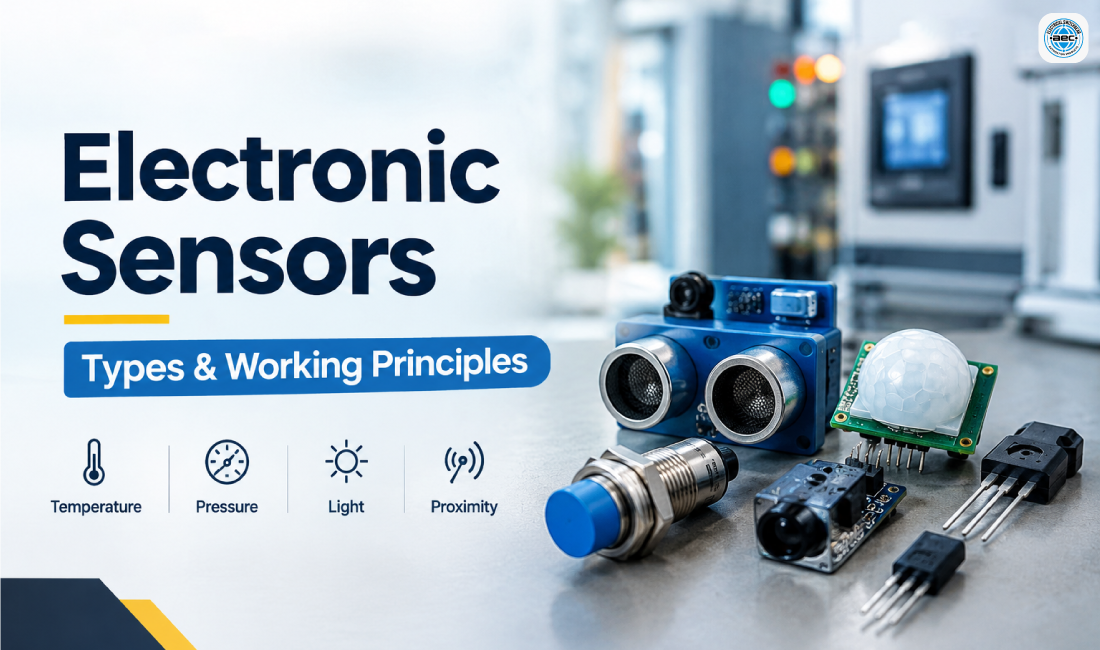
Electronic sensors have become an essential part of modern electrical systems, industrial automation, machines, vehicles, smart devices, security systems, and everyday electronics. These devices allow equipment to detect changes in temperature, pressure, light, movement, distance, position, humidity, gas concentration, and other physical conditions. An Electronic Sensor works by detecting a physical or environmental change and converting it into an electrical signal that can be measured, processed, displayed, or used to control another device. In simple terms, sensors provide the connection between the physical world and electronic control systems. From factory automation and HVAC equipment to safety systems and consumer electronics, reliable sensors help machines make accurate decisions and operate efficiently.
What Are Electronic Sensors and How Do They Work?
An Electronic Sensor is a device that detects a specific physical, chemical, or environmental condition and converts that information into an electrical output. Depending on the sensor design, the output may be a voltage, current, resistance change, frequency, switching signal, or digital data. The basic working process starts when the sensing element responds to a change around it, such as increasing temperature, approaching metal, changing light intensity, pressure variation, or human movement. The sensor then converts this physical change into an electrical signal that can be interpreted by a controller, PLC, microcontroller, display, relay, or other electronic equipment. This process is commonly known as transduction, because the sensor transforms one form of energy or physical information into another measurable form. The working principle of most Electronic Sensors can be understood through three simple stages: detection, conversion, and processing. During detection, the sensing element identifies a change in the surrounding environment. During conversion, that change is transformed into an electrical characteristic such as resistance, voltage, current, capacitance, or frequency. During processing, the resulting signal is sent to a control system where it can be measured or used to trigger an action. For example, a temperature sensor can detect an increase in temperature, convert the change into an electrical signal, and send the information to a controller that switches a cooling system on. This simple process makes sensors extremely important in automation, monitoring, control, and safety applications.
Major Types of Electronic Sensors
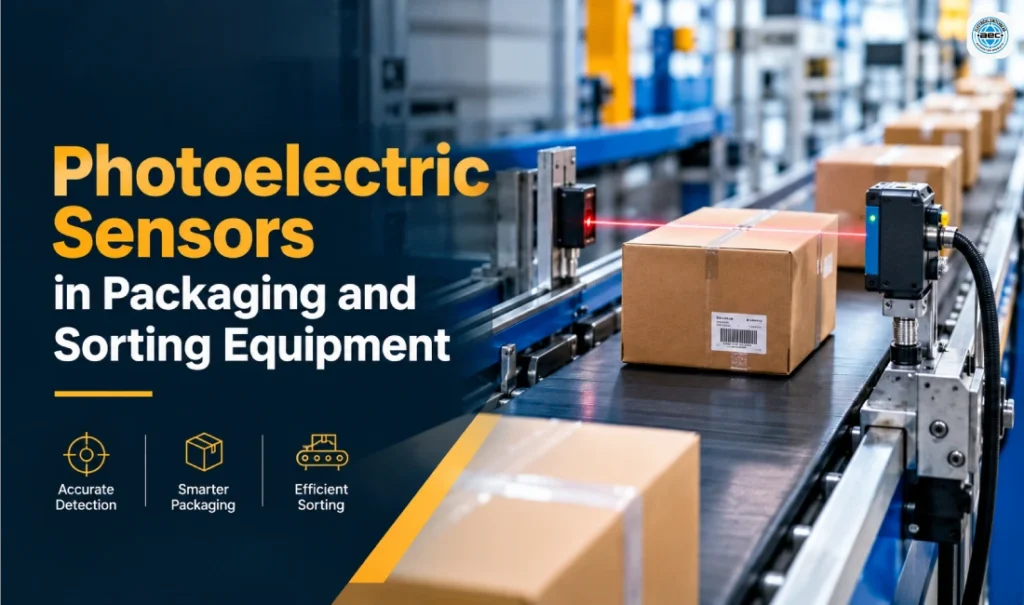
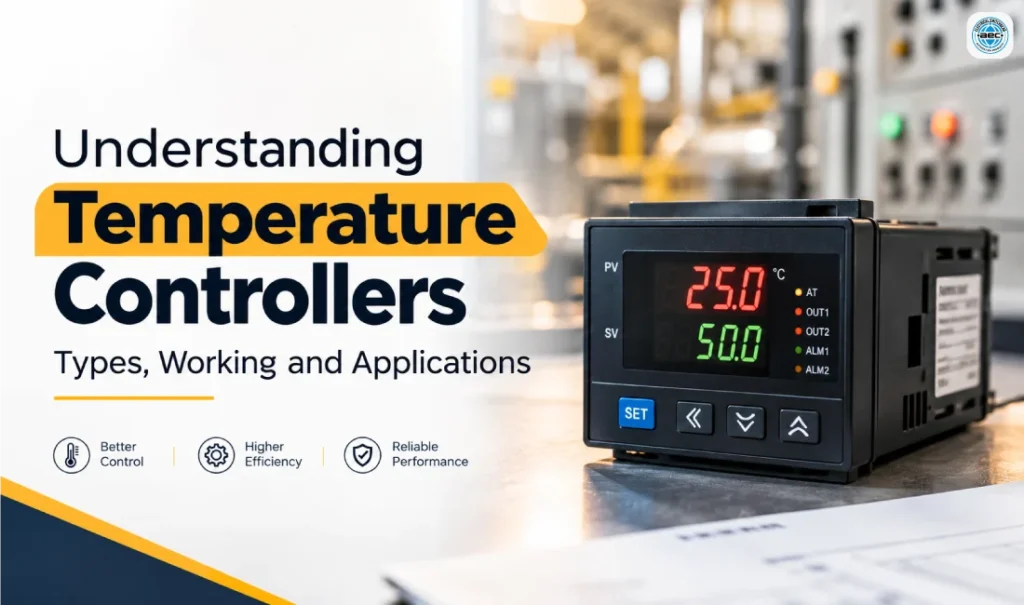
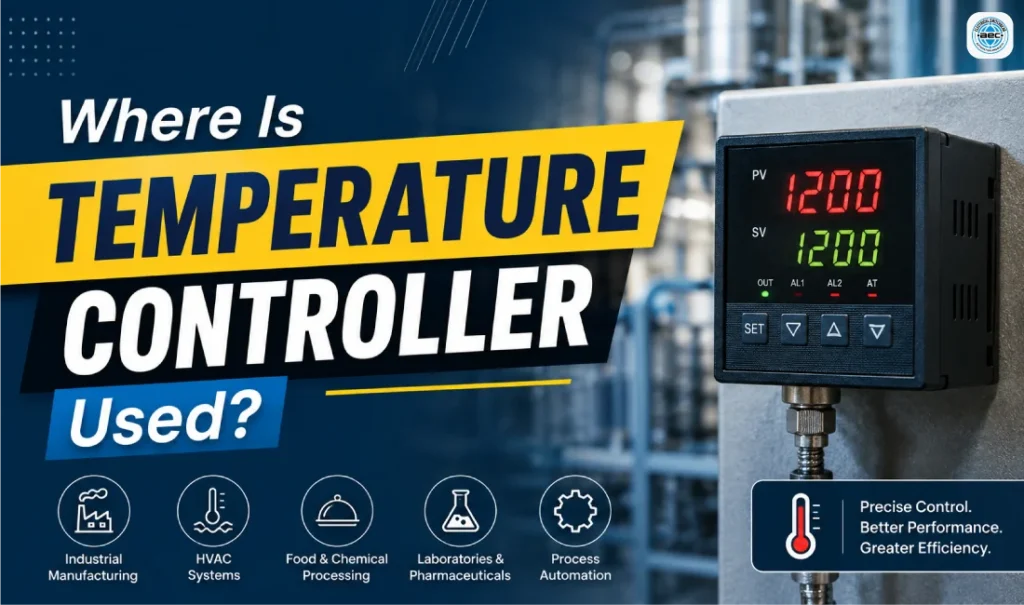
There are many types of Electronic Sensors, and each type is designed to detect a particular physical or environmental parameter. Temperature sensors measure heat, pressure sensors detect force or pressure, optical sensors respond to light, proximity sensors detect objects without physical contact, and motion sensors identify movement or changes in position. Other common categories include magnetic sensors, humidity sensors, gas sensors, level sensors, vibration sensors, and chemical sensors. The correct sensor depends on the application, measurement range, environmental conditions, response speed, required accuracy, installation method, and type of output needed by the control system. Temperature sensors are widely used for monitoring and controlling thermal conditions in electrical and industrial equipment. Thermistors change their electrical resistance according to temperature, while RTDs provide accurate temperature measurement through predictable resistance changes. Thermocouples work on the Seebeck effect and generate a small voltage when two dissimilar metals experience a temperature difference. These sensors are commonly found in HVAC equipment, industrial ovens, refrigeration systems, manufacturing machinery, process control equipment, and temperature monitoring applications. Choosing the right temperature sensor depends on factors such as operating temperature range, accuracy, response time, installation environment, and controller compatibility. Pressure and force sensors are designed to measure pressure, mechanical force, or changes in fluid and gas systems. Strain-gauge and piezoresistive sensors respond to physical deformation, which causes a change in electrical resistance. Piezoelectric sensors generate an electrical charge when mechanical stress or vibration is applied to a suitable material. Capacitive pressure sensors operate by detecting changes in capacitance caused by movement between conductive surfaces. These technologies are useful in hydraulic systems, pneumatic equipment, industrial machinery, automotive systems, weighing equipment, process monitoring, and safety applications where pressure changes need to be detected accurately. Light and optical sensors detect changes in light intensity, infrared radiation, colour, or the presence of an object. Photodiodes and phototransistors convert incoming light into an electrical response, while light-dependent resistors change their resistance according to the amount of light received. Optical sensors are commonly used in automatic lighting, object detection, counters, security equipment, cameras, electronic devices, and industrial automation systems. Their non-contact operation makes them particularly useful where mechanical contact could cause wear or where objects need to be detected quickly while moving along a production line. Proximity and distance sensors detect the presence, absence, or position of an object without requiring direct physical contact. Inductive proximity sensors are particularly useful for detecting metallic objects and are widely used in industrial automation. Capacitive sensors can detect a broader range of materials, including certain plastics, liquids, powders, and non-metallic objects. Ultrasonic sensors use high-frequency sound waves and calculate distance by measuring the time required for the reflected signal to return. Infrared sensors use infrared radiation for object detection or distance measurement. These Electronic Sensors are frequently used in conveyor systems, packaging machines, robotics, parking systems, automatic doors, production equipment, and machine safety applications. Motion, position, and magnetic sensors provide information about movement, orientation, rotation, acceleration, or magnetic fields. Accelerometers measure changes in acceleration and are commonly used in mobile devices, industrial monitoring equipment, and wearable electronics. Gyroscopes detect angular movement and orientation. Hall effect sensors detect changes in magnetic fields and can be used for speed measurement, position detection, motor control, and wheel-speed sensing. These sensors are particularly valuable in automation and modern electronic equipment because they allow a controller to understand the movement or position of mechanical components without requiring complicated mechanical arrangements. Gas, humidity, and chemical sensors are used where environmental conditions need to be monitored for safety, comfort, or process control. Gas sensors can detect substances such as carbon monoxide and other gases, while humidity sensors measure moisture levels in the surrounding environment. Depending on their construction, these sensors may operate through chemical reactions, changes in electrical resistance, capacitance, or other measurable electrical properties. They are used in air-quality systems, industrial safety equipment, HVAC systems, environmental monitoring, storage facilities, and smart building applications. Selecting the correct sensor is important because accuracy, sensitivity, response time, operating environment, and target substance can vary significantly between sensor technologies.
Active, Passive, Analog and Digital Electronic Sensors
Electronic Sensors can also be classified according to how they operate and how they produce their output. Active sensors can generate an electrical signal directly from the physical quantity being measured. Thermocouples and certain piezoelectric sensors are common examples because they can produce an electrical response from the measured physical phenomenon. Passive sensors, on the other hand, normally require an external electrical source or excitation and modify an electrical property such as resistance or capacitance. Thermistors and many resistive sensing elements are examples of passive sensors. This classification is useful when designing an electronic circuit because the sensor’s power requirements and signal-conditioning method must match the control system. Sensors can also be classified as analog or digital according to their output. Analog sensors provide a continuously varying electrical signal corresponding to the measured condition. For example, an analog temperature sensor may produce a voltage that changes as temperature changes. Digital sensors provide discrete output signals or digital data that can be directly interpreted by suitable controllers and microprocessors. Digital communication can simplify integration with modern automation systems, IoT devices, and smart control equipment. When selecting an Electronic Sensor, engineers should consider not only the sensing technology but also output type, supply voltage, signal range, response time, accuracy, environmental protection, mounting method, and compatibility with the equipment receiving the signal.
Choosing the Right Electronic Sensor for Your Application
Selecting the right Electronic Sensor is important because sensor performance directly affects the accuracy, reliability, and safety of an electrical or automation system. The first consideration should be the physical parameter that needs to be measured, such as temperature, pressure, light, distance, motion, position, humidity, or gas concentration. The operating environment should then be considered, including temperature, moisture, dust, vibration, chemicals, electrical interference, and mechanical conditions. A sensor used inside a clean electronic device may have completely different requirements from one installed on an industrial machine or production line. Output compatibility is another important factor. Before selecting a sensor, check whether the control system requires a voltage output, current output, resistance-based signal, switching output, or digital communication. The measurement range and accuracy should also match the application. A sensor with insufficient range may produce unreliable readings, while a sensor with unnecessary precision may increase system cost without providing a practical benefit. Installation space, response speed, sensing distance, power consumption, enclosure protection, and expected operating life should also be considered. For industrial applications, reliability and compatibility with existing automation equipment are especially important. For businesses and technicians looking for electrical and automation components, Aarcee Electrical provides a dedicated Sensors product category where suitable sensor products can be explored according to application requirements. Choosing the right sensor from a reliable electrical component supplier can help ensure dependable detection and control in automation, machinery, monitoring, and industrial systems. It is always advisable to check the product specifications, electrical ratings, sensing range, mounting requirements, and compatibility before installation.
Applications and Importance of Electronic Sensors
The importance of Electronic Sensors can be seen across almost every modern industry. In manufacturing, sensors help machines detect products, monitor temperature, measure pressure, identify machine positions, and control automated processes. In HVAC systems, temperature and humidity sensors help maintain suitable environmental conditions. In automotive applications, sensors provide information about speed, position, pressure, temperature, and other operating conditions. In security systems, motion and proximity sensors can detect activity and trigger alarms or other responses. Smart homes use sensors for lighting, climate control, occupancy detection, and energy management. Electronic Sensors are also becoming increasingly important in industrial automation, smart factories, robotics, and IoT systems. A modern automated machine may use multiple sensors at different stages of its operation, with each sensor providing information to a PLC, controller, or computer. This information allows the system to monitor processes, identify changes, make decisions, and respond automatically. Reliable sensing can improve productivity, reduce manual intervention, support predictive maintenance, and improve operational safety. As automation continues to expand, the demand for accurate and dependable sensors is expected to remain strong across electrical, industrial, commercial, and consumer applications.
Conclusion
Electronic Sensors are fundamental components that allow electrical and electronic systems to detect and respond to changes in the physical world. From temperature and pressure measurement to light detection, proximity sensing, motion tracking, magnetic detection, humidity monitoring, and gas detection, different sensor technologies are designed for different requirements. Understanding the working principle, output type, measurement range, environmental conditions, and application requirements makes it easier to select the right sensor for a particular system. For industrial automation, electrical control, monitoring, and machine applications, selecting a suitable sensor is essential for dependable operation. Whether the requirement involves detecting an object, measuring temperature, monitoring pressure, identifying movement, or tracking environmental conditions, the correct Electronic Sensor can provide the information needed by a control system. Aarcee Electrical’s Sensors category is a useful place to explore sensor products for different electrical and industrial requirements. Always compare technical specifications and application requirements before selecting and installing a sensor.
FAQs
Have questions? We’ve answered some of the most common queries to help you understand the topic better.
Q1. What is an Electronic Sensor?
An Electronic Sensor detects a physical or environmental change and converts it into an electrical signal that can be measured or used by a control system.
Q2. What are the main types of Electronic Sensors?
Common types include temperature, pressure, light, proximity, distance, motion, magnetic, humidity, gas, and chemical sensors.
Q3. What is the difference between analog and digital sensors?
Analog sensors produce continuously varying signals, while digital sensors provide discrete signals or digital data that can be processed by electronic controllers.
Q4. Where are Electronic Sensors used?
They are widely used in industrial automation, HVAC, automotive systems, robotics, security systems, consumer electronics, smart homes, and manufacturing equipment.
Q5. How do I choose the right Electronic Sensor?
Consider the parameter being measured, sensing range, accuracy, output type, power requirements, operating environment, response time, mounting method, and compatibility with your control system.