Where Is Temperature Controller Used?

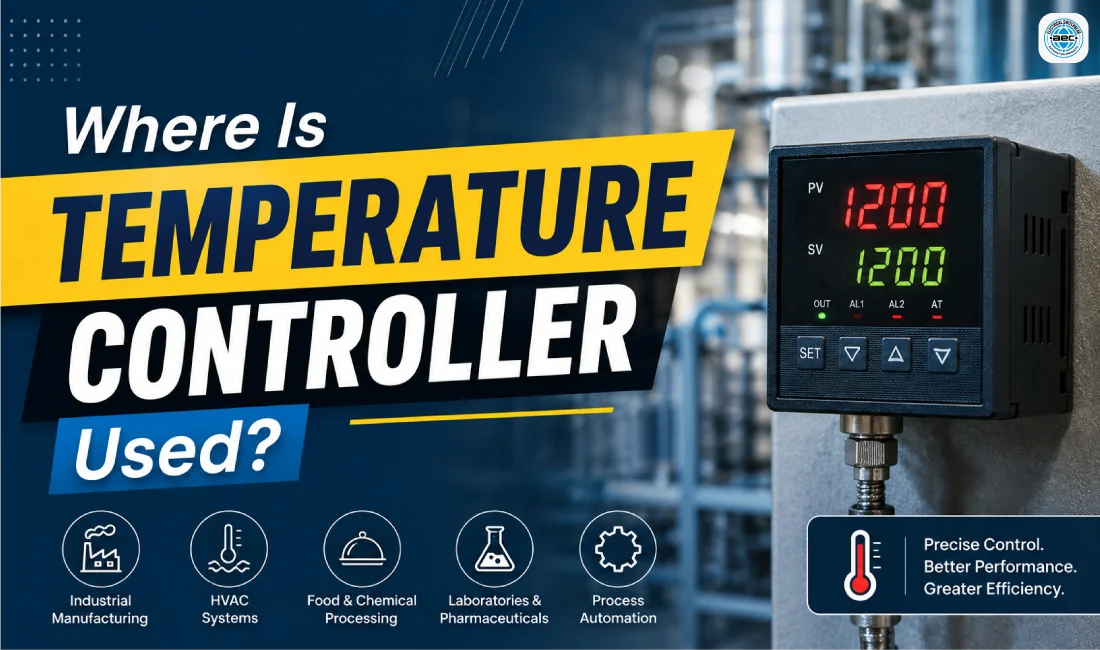
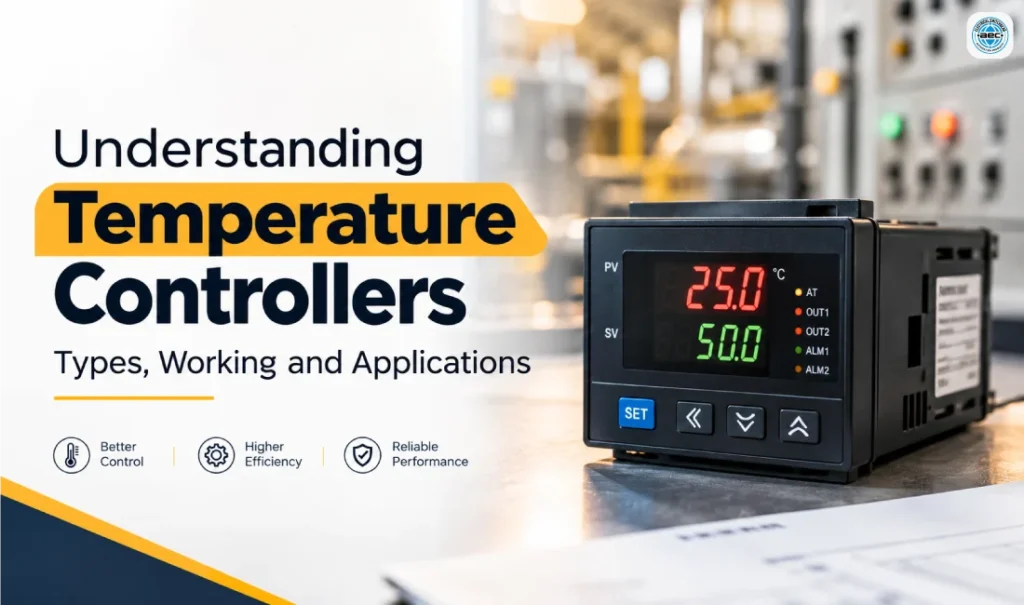
A Temperature Controller is an important industrial control device used to monitor and maintain a specific temperature automatically. It receives temperature information from a sensor, compares the measured temperature with a preset value, and controls connected heating or cooling equipment when adjustment is required. This makes temperature control more accurate and consistent than manual monitoring, especially in processes where temperature changes can affect product quality or machine performance. Temperature controllers are widely used in manufacturing plants, plastic processing, food production, HVAC systems, laboratories, pharmaceutical facilities, chemical industries, ovens, furnaces, and packaging machines. Depending on the application, a controller can work with sensors such as thermocouples or RTDs and can use ON/OFF, proportional, or PID control. Understanding where temperature controllers are used helps businesses select the right device for their equipment and process requirements.
What Is a Temperature Controller?
A Temperature Controller is an electronic device designed to measure, monitor, and regulate temperature according to a predefined setpoint. The controller receives an input signal from a temperature sensor, such as a thermocouple or RTD, and continuously compares the actual temperature with the desired temperature. When the measured value moves away from the setpoint, the controller sends an output signal to a heating or cooling device to bring the temperature back toward the required level. This automatic process reduces the need for constant manual monitoring and helps maintain more stable operating conditions. Digital temperature controllers are commonly used in industrial environments because they provide clear readings and allow operators to set the required temperature easily. Different temperature control applications require different control methods. A basic system may use ON/OFF control, where the heating or cooling output switches on or off depending on the measured temperature. More demanding processes may use proportional or PID control to achieve more precise temperature regulation and reduce fluctuations. The sensor is also an important part of the system because inaccurate temperature feedback can affect the controller’s performance. Thermocouples are often selected for applications involving higher temperatures, while RTD sensors are commonly used where accurate and stable measurement is required within their suitable operating range. The controller, sensor, and output device therefore need to be compatible with one another. Temperature controllers can also include useful features such as alarms, programmable settings, multiple outputs, digital displays, and communication functions. In larger industrial systems, they may work alongside PLCs, HMIs, relays, contactors, solid-state relays, valves, and other automation components. The correct choice depends on the application, temperature range, sensor input, output requirements, electrical ratings, and operating environment. For this reason, a temperature controller should be selected according to the actual process rather than simply choosing a device based on its display or size.
Where Is Temperature Controller Used?
A Temperature Controller is used in almost any application where maintaining a particular temperature is important for production, equipment operation, storage, or environmental conditions. One of the largest areas of use is industrial manufacturing. Plastic injection molding machines, extrusion machines, rubber processing equipment, industrial ovens, furnaces, heat treatment systems, and other production machinery often require controlled temperatures. In plastic processing, for example, materials must be heated to suitable temperatures so that they can melt, flow, and form correctly. If the temperature is too low, processing may become difficult, while excessive heat can affect material properties and product quality. A suitable industrial temperature controller helps maintain the required process temperature and supports consistent production. Temperature controllers are also widely used in industrial ovens and furnaces for heating, drying, curing, baking, annealing, and heat treatment processes. These applications can require stable temperatures over long operating periods, making automatic control particularly useful. A PID temperature controller may be selected when a process requires closer control and reduced temperature variation. The controller can operate heating elements through an appropriate relay, contactor, or solid-state switching device based on the system design. This allows the heating equipment to respond automatically when the measured temperature changes. The food and beverage industry uses temperature controllers in cooking equipment, ovens, warmers, refrigeration systems, storage equipment, and packaging machinery. Temperature can affect food processing, storage, and packaging quality, so maintaining the required operating range is important. Packaging machines may use temperature control for sealing bars, where the heating element needs to reach a suitable temperature for consistent sealing. Refrigeration and cold-storage equipment can also use temperature monitoring and control to maintain the conditions required for stored products. Another major application is HVAC and building climate control. Heating, ventilation, and air-conditioning systems use temperature feedback to regulate heating equipment, cooling systems, fans, valves, and related components. Commercial buildings, factories, warehouses, offices, laboratories, and specialized rooms may require different temperature settings based on their purpose. A temperature control system allows the connected equipment to respond automatically when the measured temperature changes, helping maintain the desired indoor environment without continuous manual adjustment. In chemical and process industries, temperature controllers are used with tanks, vessels, reactors, heating jackets, cooling systems, and other process equipment. Temperature can influence chemical reactions, material properties, process speed, and overall production conditions. A controller can help maintain the required temperature range by regulating heating or cooling equipment based on sensor feedback. These applications require careful selection of sensors, control ranges, outputs, and protective features because the controller needs to match the process and equipment specifications. Temperature controllers are also common in laboratories, medical facilities, and pharmaceutical applications. Incubators, laboratory ovens, sterilization equipment, refrigerators, freezers, environmental chambers, and testing equipment may require stable temperature conditions. Research and testing processes often depend on repeatable environmental conditions, making accurate measurement and automatic regulation important. Controllers with alarm functions can also notify operators when temperatures move outside configured limits, depending on the equipment and control system. Other industries that use temperature controllers include textile manufacturing, printing, electronics production, semiconductor processing, packaging, energy systems, and general industrial automation. The exact application changes from one industry to another, but the basic purpose remains the same: measure the current temperature, compare it with the desired setpoint, and control the connected equipment to maintain the required thermal condition.
Why Is Temperature Control Important?
Accurate temperature control is important because temperature can directly influence the performance of machines, materials, products, and industrial processes. When a process operates outside its required temperature range, it may result in inconsistent product quality, material damage, longer production cycles, equipment stress, or unnecessary energy consumption. A Temperature Controller provides automatic regulation by continuously receiving information from a sensor and responding when the measured temperature changes. This is particularly useful in manufacturing processes where operators need consistent conditions throughout production. One of the main benefits is process consistency. Manufacturing companies often need to produce the same product repeatedly with similar quality. Processes such as molding, curing, drying, heating, sealing, cooking, and heat treatment can depend heavily on temperature. If temperature fluctuates significantly, the final result may vary between products or production batches. An appropriately configured temperature control system can help reduce unwanted variations and maintain more stable operating conditions. Temperature control can also help protect equipment from unsuitable operating conditions. Excessive heat may damage heating elements, insulation, electronic components, materials, and machine parts, while insufficient temperature may prevent a process from operating correctly. Some temperature controllers offer alarm functions that can help identify abnormal temperature conditions. However, the controller should always be installed and configured according to the equipment manufacturer’s requirements and the electrical specifications of the complete system. Energy management is another consideration. Heating and cooling equipment that operates continuously without proper regulation may use more energy than necessary. A controller can activate or adjust connected equipment according to temperature feedback and the selected setpoint. Actual energy consumption depends on many factors, including the equipment type, insulation, process load, operating temperature, and working conditions, so a temperature controller should not be considered an automatic guarantee of energy savings. Its main role is to provide controlled and responsive temperature regulation.
How to Choose the Right Temperature Controller?
Choosing the right Temperature Controller starts with understanding the process and equipment requirements. The first consideration is the required temperature range because the controller and sensor must be suitable for the temperatures involved. The type of temperature sensor should then be identified. Thermocouples and RTDs are widely used, but the correct option depends on the required accuracy, temperature range, application environment, and controller compatibility. The control method is another important consideration. ON/OFF control may be suitable for simple applications where some temperature variation is acceptable. Proportional or PID control may be preferred for processes that require more precise regulation and better control of temperature fluctuations. The controller’s output must also be compatible with the equipment being controlled, such as a heater, cooling system, relay, solid-state relay, contactor, valve, or other industrial device. Other factors may include display type, alarm functions, number of inputs and outputs, programming options, communication interfaces, electrical ratings, mounting method, and environmental conditions. Industrial users should also consider whether the controller needs to communicate with a PLC, HMI, or other automation equipment. Selecting the complete temperature control setup rather than only the controller can help create a more reliable system. For businesses searching for industrial electrical and automation products, Aarcee Electrical provides products and solutions for different industrial requirements. Before purchasing a temperature controller, it is useful to understand the machine, sensor, load, temperature range, and control requirements so that the selected equipment matches the application.
Conclusion
A Temperature Controller is used across a wide range of industries where accurate and consistent temperature regulation is required. From plastic injection molding and extrusion to industrial ovens, furnaces, food processing, HVAC systems, chemical plants, laboratories, pharmaceutical equipment, and packaging machines, temperature control supports reliable operation and consistent process conditions. The right controller depends on factors such as temperature range, sensor type, control method, output, electrical requirements, and application environment. Proper installation, sensor placement, configuration, and maintenance are also important for dependable performance. By understanding the specific requirements of the process before selecting a controller, industrial users can build a temperature control system that is better suited to their equipment and operating conditions.
FAQs
Have questions? We’ve answered some of the most common queries to help you understand the topic better.
Q1. Where is a Temperature Controller commonly used?
A Temperature Controller is commonly used in manufacturing, plastic processing, ovens, furnaces, food processing, HVAC, laboratories, chemical processing, pharmaceuticals, and packaging.
Q2. What sensor is used with a Temperature Controller?
Common sensors include thermocouples and RTDs. The correct sensor depends on the required temperature range, accuracy, application, and controller compatibility.
Q3. What is a PID Temperature Controller?
A PID Temperature Controller uses proportional, integral, and derivative control to regulate temperature more precisely and reduce unwanted fluctuations in suitable applications.
Q4. Can a Temperature Controller control heating and cooling?
Yes. Depending on its design and configuration, a temperature controller can control heating, cooling, or both using suitable outputs and connected equipment.
Q5. How do I choose the right Temperature Controller?
Consider the required temperature range, sensor type, control method, output type, electrical ratings, load, accuracy requirements, and communication or alarm features needed for the application.