Types of Industrial Sensors For Automation


Industrial automation relies on accurate information to control machines, production lines, and industrial processes. Industrial Sensors collect information about physical conditions such as temperature, pressure, position, movement, vibration, level, flow, humidity, and object presence. They convert these physical changes into electrical signals that can be understood by PLCs, controllers, HMIs, and other automation equipment. This allows machines to make decisions automatically, improve production consistency, and reduce the need for constant manual inspection. From manufacturing plants and packaging machines to process industries and material-handling systems, sensors are an essential part of modern automation. Choosing the right sensor depends on the property being measured, operating environment, sensing range, accuracy, response time, and compatibility with the control system.
What Are Industrial Sensors and Why Are They Important?
Industrial Sensors are devices that detect changes in physical conditions and convert those changes into signals used by industrial control systems. They create an important connection between the physical process and the electronic system controlling the machine or production line. For example, a proximity sensor can detect whether a component is present, while a temperature sensor can monitor heat inside an industrial process. The signal from the sensor can be used by a PLC, relay, controller, HMI, or automation system to start, stop, adjust, or protect equipment. This continuous feedback helps automated machines operate accurately without requiring an operator to check every step manually. Reliable sensors can improve productivity, repeatability, equipment protection, process control, and maintenance planning. For this reason, understanding different types of Industrial Sensors is important when designing, upgrading, or maintaining an automated industrial system. Sensors are used in almost every modern production environment. A conveyor may use a sensor to detect products, an encoder may measure shaft movement, and a temperature sensor may help maintain a specific process temperature. Sensor selection is important because an unsuitable device can cause false detection, unstable signals, machine downtime, or inaccurate process control. Factors such as sensing distance, target material, temperature, moisture, dust, vibration, mounting space, output type, and supply voltage should be considered before purchasing.
Temperature Sensors for Automation
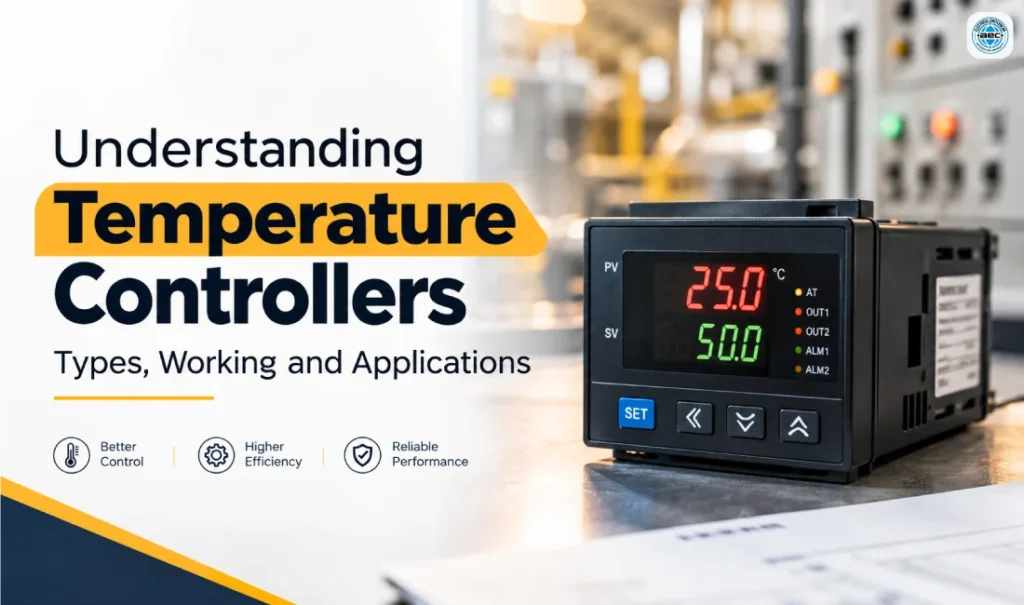
Temperature sensors measure heat and temperature changes and provide information that allows an automation system to maintain the required operating conditions. They are commonly used in manufacturing equipment, ovens, furnaces, HVAC systems, food processing machines, plastic machinery, packaging equipment, and industrial heating applications. Common technologies include thermocouples, RTDs, thermistors, and infrared sensors, with each offering different temperature ranges, response times, and accuracy levels. A temperature signal can be sent to a controller that regulates heaters, cooling systems, fans, or other equipment automatically. Accurate temperature measurement is important because excessive or insufficient heat can affect product quality, equipment life, energy consumption, and process safety. The sensor should be selected according to the required temperature range, accuracy, installation method, response time, environment, and controller compatibility. A dependable temperature measurement system helps maintain stable production conditions and reduces variations caused by uncontrolled temperature changes. Temperature sensing can also be used for equipment monitoring. Motors, bearings, compressors, electrical cabinets, and other components can become unusually hot because of overload, friction, poor ventilation, or developing faults.
Pressure Sensors for Industrial Processes
Pressure sensors measure the pressure of gases or liquids and convert the measurement into an electrical signal for monitoring and control. They are widely used in hydraulic systems, pneumatic machinery, compressors, pumps, pipelines, process equipment, and fluid-handling applications. Depending on the application, pressure may be measured as gauge, absolute, or differential pressure. An automation controller can use pressure information to maintain a required operating range, activate an alarm, or stop equipment when unsafe conditions develop. For example, a sudden pressure drop in a pneumatic system may indicate leakage, while excessive pressure can indicate a blockage or abnormal process condition. When selecting a pressure sensor, users should consider pressure range, process medium, connection type, temperature, accuracy, response time, and output signal. Correct pressure measurement helps improve process stability, equipment protection, fault detection, and overall automation performance. Pressure sensors are particularly useful in systems where continuous manual monitoring would be difficult. They allow controllers to receive real-time information and react quickly when pressure moves outside the required range.
Proximity Sensors for Object Detection
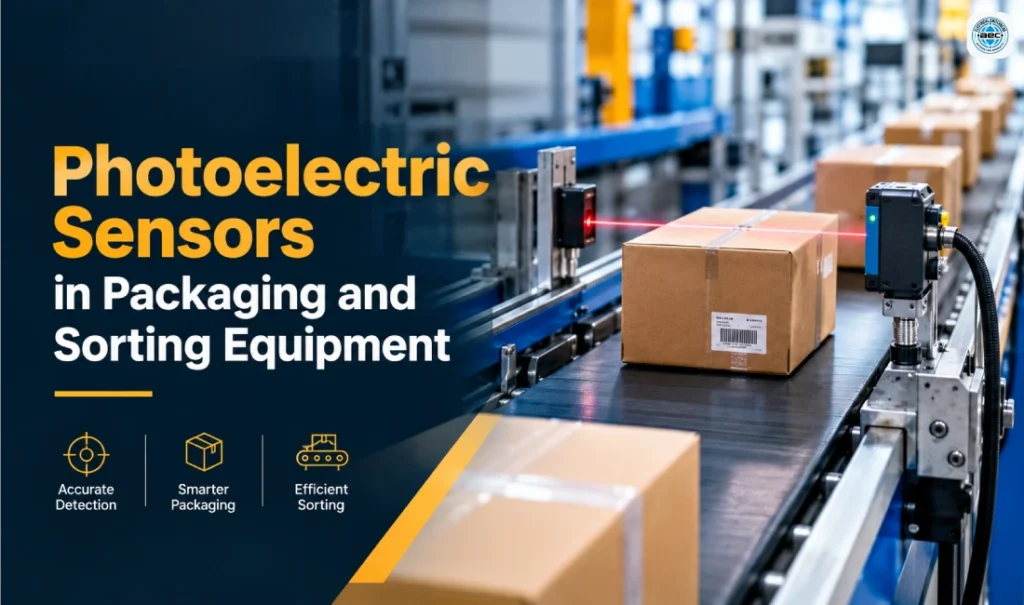
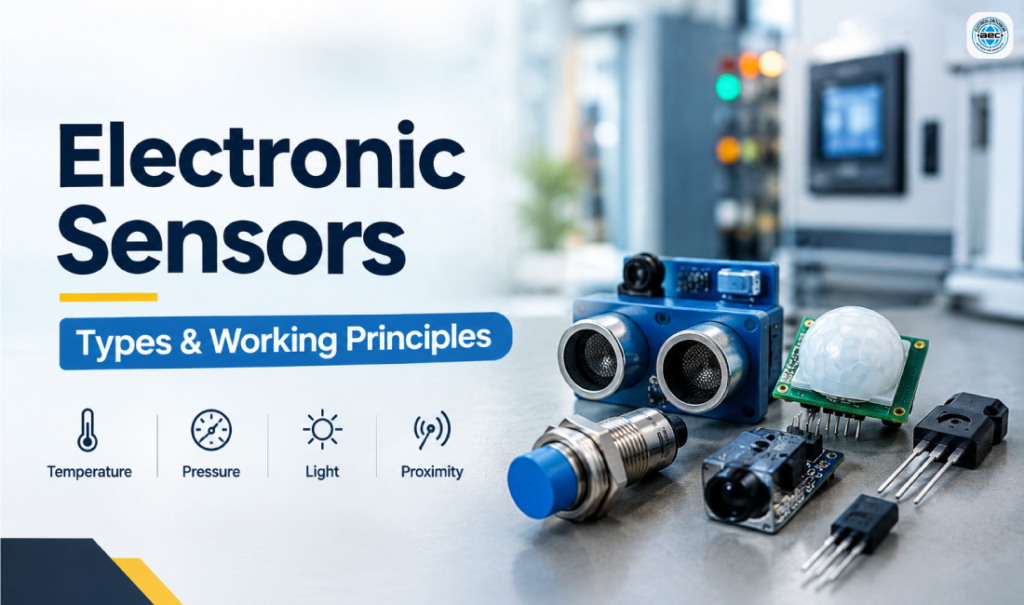
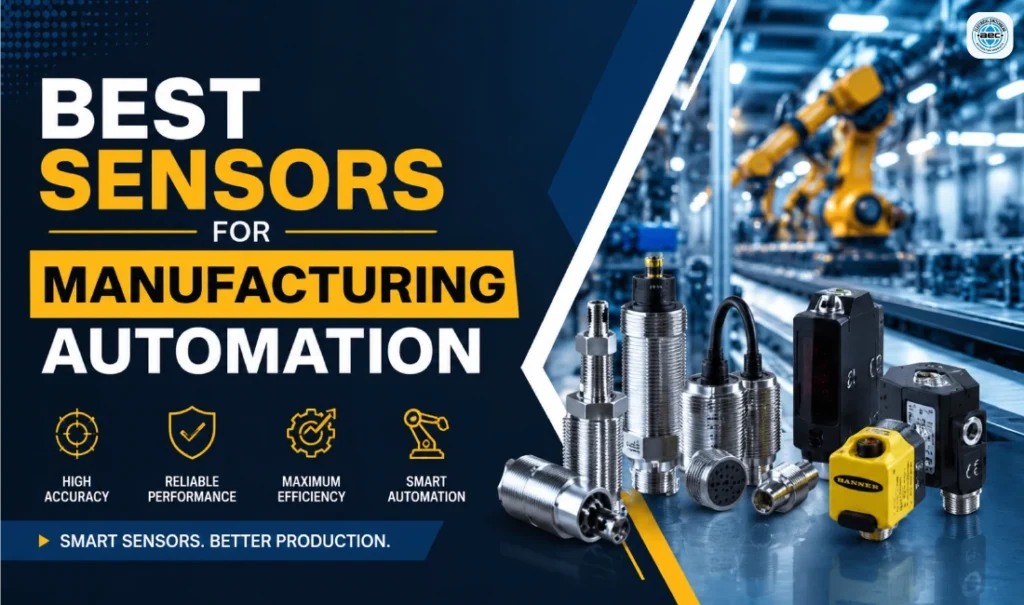
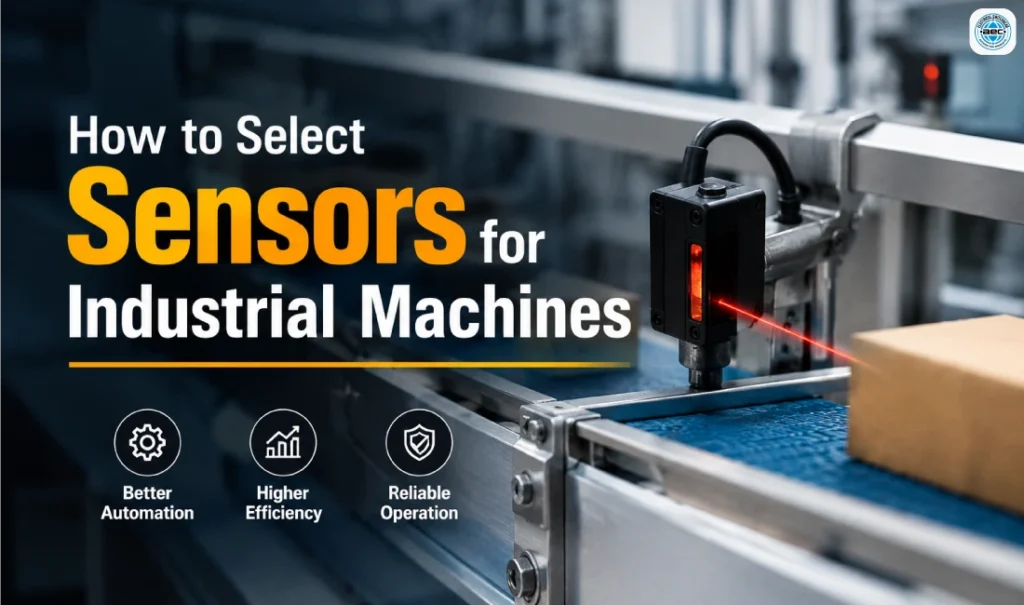
Proximity sensors detect the presence, absence, or position of an object without requiring direct physical contact, making them one of the most common sensor types in industrial automation. Inductive proximity sensors are generally used to detect metal objects, while capacitive sensors can detect materials such as plastics, liquids, powders, and other non-metallic targets. Photoelectric sensors use light for detection and are useful where longer sensing distances or different types of objects need to be identified. These sensors are widely used on conveyors, assembly machines, packaging equipment, robotic systems, machine tools, and automated production lines. Because contact is not normally required, proximity sensors can provide fast and repeatable detection while avoiding mechanical wear caused by physical switches. The correct sensor depends on the target material, sensing distance, object size, installation position, response speed, and surrounding conditions. Properly selected proximity sensors can improve counting, positioning, sequencing, product detection, and machine control. Aarcee Electrical Controls offers industrial automation products including Omron proximity sensors. Its product range includes models such as the Omron E2E-S05S12-WC-B2 2M and E2B-M30KN20-WP-B1 2M, providing options for different industrial sensing requirements. For example, a proximity sensor can confirm that a metal component has reached a particular position before the next machine operation begins. It can also detect products on a conveyor or count objects moving through a production process.
Level and Flow Sensors
Level sensors monitor the amount or position of liquids, powders, granules, or other materials inside tanks, vessels, hoppers, and processing equipment. They can provide point-level detection or continuous measurement depending on whether the system needs a simple high or low indication or an actual level reading. Level monitoring helps prevent tank overflow, protect pumps from dry running, maintain material quantities, and control automatic filling or emptying processes. Flow sensors and flow meters measure how quickly liquids or gases move through pipes and are used in cooling, water treatment, chemical processing, compressed-air systems, and other industrial applications. Accurate flow information can help an automation system confirm that a process is receiving the required quantity of fluid or gas. Sensor selection depends on factors such as the material being measured, temperature, pressure, pipe arrangement, flow range, accuracy, and installation conditions. Level and flow measurement together provide valuable process information and allow industrial equipment to respond automatically when fluid or material conditions change. For example, an automated tank system can use a level sensor to start a pump when the material falls below a particular point and stop the pump when the required level is reached.
Vibration, Position and Motion Sensors
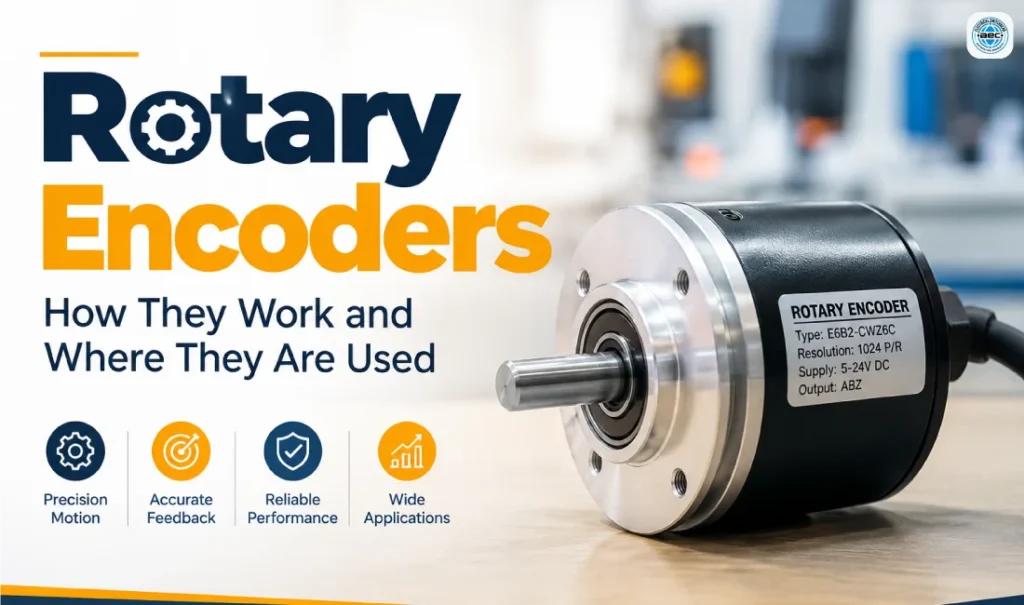
Vibration sensors monitor mechanical movement and can help identify changes in the condition of rotating equipment such as motors, pumps, fans, compressors, bearings, and gearboxes. Abnormal vibration can be an early indication of problems such as imbalance, misalignment, looseness, bearing wear, or other mechanical faults. Position and motion sensors provide information about where a machine component is located, how far it has moved, or how quickly it is moving. Rotary encoders are commonly used when machines require accurate information about shaft rotation, position, speed, or movement. They are particularly useful in packaging machines, conveyors, cutting systems, printing equipment, winding machines, robotics, and automated positioning systems. Aarcee Electrical Controls offers products such as the Omron E6B2-CWZ6C 2000P/R 2M rotary encoder, supporting applications where accurate motion feedback is required. Combining reliable Industrial Sensors with suitable control equipment can improve positioning accuracy, machine coordination, repeatability, and maintenance monitoring. Vibration monitoring can also support preventive maintenance. Instead of waiting for a motor or pump to fail, maintenance teams can investigate unusual vibration readings before a minor mechanical issue develops into a major breakdown.
Gas, Humidity and Environmental Sensors
Gas and humidity sensors monitor environmental conditions that can affect workers, equipment, materials, and industrial processes. Humidity sensors are useful in controlled production areas, storage facilities, HVAC systems, electronics manufacturing, and other environments where moisture needs to remain within a specific range. Gas sensors can detect specific gases or potentially hazardous concentrations and may be connected to alarms, ventilation systems, or monitoring equipment. Other environmental sensors can be used to monitor conditions such as light, air quality, smoke, or other application-specific variables. These devices provide continuous information that allows an automation system to respond when environmental conditions change. Selection should consider the substance being measured, measurement range, response time, calibration requirements, environmental conditions, and installation location. Using suitable environmental sensors can improve process control, equipment protection, and workplace monitoring in applications where surrounding conditions are important. Industrial environments can expose sensors to dust, moisture, chemicals, vibration, and temperature changes. Therefore, enclosure protection, mounting, cabling, and environmental compatibility should be considered along with the sensing technology itself.
How to Select the Right Industrial Sensors
Choosing the right Industrial Sensors should begin with understanding exactly what needs to be detected or measured. First, identify whether the application involves temperature, pressure, object detection, position, movement, vibration, level, flow, humidity, gas, or another physical property. Next, evaluate the operating environment, including temperature, moisture, dust, chemicals, vibration, available space, and the speed of the process. The electrical specifications must also match the PLC, controller, relay, counter, HMI, or other equipment receiving the sensor signal. Important specifications include sensing range, accuracy, response time, supply voltage, output type, connection method, mounting arrangement, and operating temperature. For machines that operate continuously, product reliability, replacement availability, and ease of maintenance should also be considered before final selection. Taking these factors into account helps prevent false signals, unnecessary downtime, repeated replacement, and compatibility problems. For example, an inductive proximity sensor may be the right choice for detecting a metal component at a short distance, while an encoder would be more suitable for measuring rotary movement. Aarcee Electrical Controls supplies industrial electrical, control gear, and automation products and works with established brands including Omron Automation, BCH Electric, KEI Industries, Rishabh Instruments, Salzer Electronics, and Socomec. The company serves manufacturers, OEMs, panel builders, automation integrators, contractors, and industrial customers.
Applications of Industrial Sensors in Automation
Industrial Sensors are used across manufacturing, packaging, material handling, process industries, machine building, and many other industrial applications. Packaging machines use sensors to detect products, confirm positions, count items, and control automated sequences. Conveyor systems use proximity and photoelectric sensors to identify products, while encoders can provide speed and movement feedback. Manufacturing machinery can use position sensors and encoders to maintain accurate movement and repeatable production operations. Process industries use temperature, pressure, level, and flow sensors to monitor important operating conditions continuously. Vibration and temperature monitoring can also provide useful information for preventive maintenance and help identify developing equipment problems. As industrial automation becomes more advanced, reliable sensing technology remains essential because controllers can only make accurate decisions when they receive dependable information. The correct sensor can reduce manual inspection and help machines perform repetitive tasks consistently. It can also reduce production errors, unnecessary machine stops, and equipment damage.
Why Choose Aarcee Electrical Controls?
Choosing the right sensor is only one part of a successful automation project; sourcing suitable industrial components from a reliable supplier is equally important. Aarcee Electrical Controls has been serving the industrial market since 2006 and supplies industrial electrical, control gear, and automation products across India. Its product range includes proximity sensors, rotary encoders, timers, relays, SMPS products, temperature controllers, signal-related products, and other industrial components. The company works with established brands and serves manufacturers, OEMs, panel builders, automation integrators, contractors, and industrial users. Its website allows customers to explore industrial products and identify components suitable for different electrical and automation applications. For businesses upgrading machines, building new automation systems, or replacing existing components, Aarcee Electrical Controls can be a practical source for industrial electrical and automation products. Customers can visit Aarcee Electrical Controls to explore available products and select components according to their machine and application requirements.
Conclusion
Industrial Sensors provide the information that automated machines need to detect conditions, make decisions, and control industrial processes accurately. Temperature, pressure, proximity, level, flow, vibration, position, motion, gas, and humidity sensors each have different purposes and application requirements. The best sensor depends on the physical property being measured, target material, sensing range, operating environment, accuracy, response time, and control-system compatibility. Using suitable sensors can improve productivity, process consistency, equipment protection, machine reliability, and preventive maintenance. For manufacturers, OEMs, machine builders, panel builders, and automation integrators, choosing suitable and reliable industrial components is an important part of successful automation. Aarcee Electrical Controls offers a broad range of industrial electrical, control gear, and automation products for businesses looking for components from established industrial brands. If you are planning an automation project or replacing an existing sensor, evaluate the application carefully and choose the sensor technology that best matches the machine’s actual requirements.
FAQs
Have questions? We’ve answered some of the most common queries to help you understand the topic better.
Q1. What are Industrial Sensors used for?
They detect physical conditions such as temperature, pressure, position, movement, vibration, level, flow, humidity, gas concentration, and object presence. Their signals are used by automation and control systems.
Q2. Which sensor is best for detecting metal objects?
An inductive proximity sensor is commonly used for non-contact metal detection. Selection depends on sensing distance, target size, operating environment, and electrical requirements.
Q3. What is an industrial proximity sensor?
It is a non-contact sensor that detects an object when it enters its sensing range. Inductive, capacitive, and photoelectric technologies are common options.
Q4. What is the purpose of a rotary encoder?
A rotary encoder provides feedback about shaft rotation, position, speed, or movement and is widely used in automated machinery requiring accurate motion control.
Q5. How do I choose the right sensor?
Identify the property that needs to be measured, then check sensing range, accuracy, response time, environment, output type, power requirements, mounting method, and controller compatibility.