What Is an Automatic Transfer Switch?

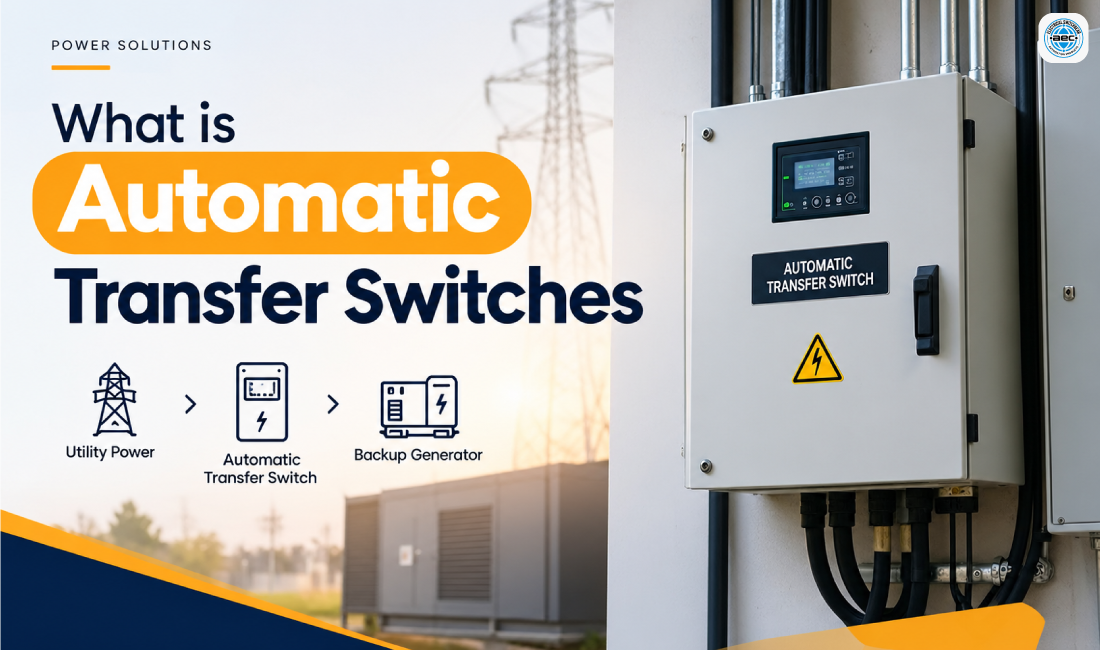
Reliable electricity is essential for homes, offices, factories, hospitals, data centres, commercial buildings, and other facilities where an unexpected power interruption can affect daily operations. An Automatic Transfer Switch (ATS) is an electrical device designed to automatically move an electrical load from a normal power source to a backup source, usually a standby generator, when the primary supply becomes unavailable. It performs this process without requiring someone to manually operate the electrical connection. An ATS continuously monitors the incoming utility supply and detects conditions such as power failure, low voltage, or other programmed abnormalities. When the normal supply fails, the switch can send a start signal to the standby generator, wait until the generator produces suitable power, and then transfer the connected load to the backup source. When utility power returns and becomes stable, the ATS transfers the load back to the normal source and allows the generator to complete its shutdown sequence. The main purpose of an Automatic Transfer system is to provide controlled and dependable switching between two power sources. It is commonly used with standby generators in homes, offices, industrial facilities, healthcare buildings, telecommunications sites, commercial properties, and other locations where maintaining electrical service is important.
How Does an Automatic Transfer Switch Work?
An Automatic Transfer Switch works by continuously monitoring the condition of the primary electrical supply and controlling the connection between the normal and emergency power sources. Under normal operating conditions, electricity reaches the building from the utility supply while the standby generator remains available for use when required. The ATS controller monitors the incoming voltage and programmed operating conditions to determine whether the normal source is suitable for the connected load. When the utility supply fails or falls outside the acceptable limits, the ATS identifies the condition as a power-source failure. Depending on the controller settings, a short time delay may be used before the generator-start command is issued. This can help prevent the generator from starting unnecessarily because of a very brief electrical disturbance. After receiving the start signal, the standby generator starts and builds its output voltage and frequency. The transfer switch checks the emergency source before connecting the load. Once the generator reaches the required operating conditions, the ATS disconnects the load from the normal source and connects it to the generator. When utility power returns, the ATS continues monitoring the normal source until it becomes stable according to the programmed settings. The system then transfers the load from the generator back to the utility supply. The generator can continue operating for a programmed cool-down period before shutting down, leaving the backup system ready for the next interruption.
Why Is an Automatic Transfer Switch Important?
An Automatic Transfer system is important because a standby generator cannot automatically provide building power simply by being present. There needs to be a controlled method of determining when the load should be supplied by the utility and when it should be supplied by the generator. The ATS performs this role while reducing the need for manual intervention during an outage. One of the key functions of a transfer switch is maintaining electrical separation between the normal and emergency sources. Improper generator connections can create dangerous backfeed conditions in which electrical energy is unintentionally sent toward utility lines. A correctly installed and properly rated transfer switch helps control the connection between the two sources and supports the required source isolation. An ATS also provides convenience during unexpected outages. Building owners or facility personnel do not need to manually start a compatible standby generator and change electrical connections every time the utility supply fails. This is particularly useful for unattended buildings, businesses operating outside normal hours, severe weather conditions, and facilities where access to electrical equipment may not be convenient. The system can also help maintain important electrical loads. Depending on the installation, these may include lighting, refrigeration, pumps, security systems, communication equipment, computers, industrial controls, and other essential equipment. An ATS does not eliminate every interruption or power-quality issue, but it allows a properly designed backup-power system to respond automatically when the normal source becomes unavailable.
Where Are Automatic Transfer Switches Used?
Automatic Transfer Switches are used across residential, commercial, industrial, and institutional applications. The required configuration depends on the electrical system, generator capacity, connected loads, source characteristics, and continuity requirements. This means an ATS should be selected according to the actual application rather than simply choosing a model based on the generator’s advertised power rating. In homes, an ATS can be installed with a compatible standby generator to provide backup electricity during utility outages. Depending on the electrical design, the system may supply selected essential circuits or a larger portion of the home’s electrical service. Important loads can include refrigerators, lighting, security systems, water pumps, heating or cooling equipment, and communication devices. Commercial buildings may use transfer switches to support essential systems during an outage. Offices, hotels, warehouses, retail properties, and other facilities can have critical lighting, refrigeration, security equipment, networking systems, and other electrical loads that require backup power. Automatic switching allows these systems to receive generator power without depending entirely on manual operation. Industrial facilities can use ATS equipment as part of a larger emergency or standby power system. Manufacturing machinery, process controls, ventilation systems, pumps, and other equipment may require reliable electrical service to reduce operational disruption. In these environments, the transfer switch must be selected according to the characteristics of the connected loads and the facility’s electrical distribution system. Healthcare facilities, data centres, telecommunications sites, and other critical environments can have more demanding backup-power requirements. Such installations may use multiple transfer switches, generators, emergency distribution equipment, and additional power-management systems. The design and installation should follow applicable electrical codes, standards, manufacturer requirements, and professional engineering practices.
What Are the Main Types of Automatic Transfer Switches?
Automatic Transfer Switches are available in different configurations depending on how the electrical load needs to move between the normal and emergency sources. The most common distinction is between open-transition and closed-transition transfer systems. An open-transition ATS is commonly described as a break-before-make arrangement. It disconnects the load from the first source before connecting it to the second source. This creates a short interruption during transfer but keeps the two power sources electrically separated. This arrangement is widely used in standby-generator applications where a brief interruption is acceptable. A closed-transition ATS, sometimes described as make-before-break, can momentarily connect the sources under controlled conditions before disconnecting the original source. This approach can reduce the interruption experienced by certain loads, but it requires compatible sources and appropriate controls. Synchronisation and other electrical conditions must be considered carefully. Some installations also use bypass-isolation transfer switches. These designs can provide additional service and maintenance flexibility in applications where the transfer mechanism needs to be isolated while the load continues to receive power through the appropriate arrangement. The correct ATS type depends on the application, source characteristics, connected loads, required continuity, generator system, installation environment, and applicable electrical requirements.
How Do You Select the Right Automatic Transfer Switch?
Selecting an Automatic Transfer Switch requires more than matching the switch with the generator’s kilowatt rating. The ATS should be compatible with the system voltage, current rating, frequency, number of phases, wiring arrangement, number of poles, and available fault conditions. The connected load should also be evaluated because motors, pumps, compressors, electronic equipment, and other loads can have different starting and operating characteristics. The generator and ATS must be compatible with one another so that the generator-start signal, transfer sequence, voltage, and frequency requirements operate correctly. The installation may also require consideration of service-entrance ratings, enclosure type, environmental conditions, bypass-isolation requirements, communication features, monitoring, and applicable electrical standards. For commercial and industrial installations, professional electrical assessment is particularly important because the transfer equipment forms part of the building’s wider power-distribution system. The selected equipment should be correctly rated for the intended application and installed according to the manufacturer’s instructions and relevant electrical requirements.
How Should an Automatic Transfer Switch Be Installed and Maintained?
Correct installation is essential for reliable ATS operation. The equipment should be installed according to the manufacturer’s instructions and the electrical design of the building. Conductor sizing, overcurrent protection, grounding and bonding, control wiring, source connections, enclosure requirements, and generator communication all need to be considered. After installation, the system should be tested to confirm that the normal source, emergency source, generator-start command, transfer sequence, retransfer operation, and generator shutdown sequence work correctly. Testing should be performed by appropriately qualified personnel using suitable safety procedures. Regular maintenance is equally important because an ATS may remain inactive for long periods and still needs to operate immediately when an outage occurs. Maintenance can include visual inspection, checking electrical connections, reviewing controller settings, inspecting wiring and components, checking alarms or indicators, and testing the transfer operation. The standby generator should also receive scheduled maintenance because the ATS cannot provide backup electricity if the generator fails to start or cannot produce acceptable output. Maintenance frequency depends on the equipment, operating environment, application, manufacturer recommendations, and applicable requirements.
Where Can You Find Automatic Transfer Switches?
Choosing an Automatic Transfer Switch should begin with the electrical requirements of the intended application. Current rating, voltage, phase configuration, transition type, number of poles, generator compatibility, enclosure, installation environment, and control requirements should be checked before purchasing a product. Aarcee Electrical provides an Automatic Transfer Switches product category for applications requiring controlled switching between normal and backup power sources. You can explore the available products through the Automatic Transfer Switches category. Before selecting a particular model, compare its technical specifications with the generator, electrical distribution system, connected loads, and requirements of the installation. For larger commercial or industrial systems, consulting a qualified electrical professional can help ensure that the selected transfer switch is correctly sized and compatible with the complete backup-power arrangement. A properly selected, installed, and maintained ATS can make a standby power system more dependable and easier to operate during an unexpected utility interruption.
FAQs
Have questions? We’ve answered some of the most common queries to help you understand the topic better.
Q1. What is an Automatic Transfer Switch?
An Automatic Transfer Switch is a device that automatically transfers an electrical load between a normal power source and a backup source, such as a standby generator.
Q2. Does an ATS start the generator automatically?
Yes. In a compatible standby-generator system, the ATS can send a start signal to the generator after detecting an appropriate utility-power failure.
Q3. Can an ATS be used for homes?
Yes. A compatible ATS can automatically transfer selected household circuits or the appropriate electrical service to a standby generator during an outage.
Q4. What happens when utility power returns?
The ATS monitors the returning utility supply and transfers the load back to the normal source after the programmed conditions are satisfied. The generator can then complete its cool-down cycle and shut down.
Q5. How do I choose the correct ATS?
Consider the system voltage, current, phase, generator capacity, connected loads, transition type, number of poles, installation conditions, and applicable electrical requirements before selecting an ATS.