Smart Manufacturing and the Role of Industrial Automation

Manufacturing is rapidly moving toward connected, automated, and data-driven production. At the center of this transformation is Industrial Automation, which enables machines, sensors, controllers, protection devices, and production systems to work together with greater accuracy and consistency. Smart manufacturing combines automation with technologies such as Industrial Internet of Things (IIoT), artificial intelligence, machine learning, robotics, analytics, and digital twins to improve productivity, quality, equipment monitoring, and decision-making. For manufacturers, OEMs, panel builders, and automation integrators, this transformation creates new opportunities to reduce downtime, improve process control, and achieve more efficient production. Aarcee Electrical Controls supports these requirements with a wide range of industrial automation and electrical products, including sensors, rotary encoders, temperature controllers, counters, timers, EOCR, and signal isolators.
What Is Smart Manufacturing?
Smart manufacturing is a modern approach to production in which machines, industrial equipment, sensors, control systems, software, and people work together using connected information. Instead of depending only on manual inspections or periodic production reports, smart manufacturing allows businesses to monitor processes and equipment more continuously. This helps manufacturers understand what is happening on the factory floor and respond to changing conditions more quickly. NIST describes smart manufacturing as an integrated approach that allows manufacturing systems to respond to changing production and operational requirements. (nist.gov) The foundation of smart manufacturing is reliable information. Sensors collect data from machines, controllers process signals, and automation systems respond according to programmed conditions. Additional technologies can then analyze this information and provide insights for production, maintenance, quality, and efficiency. For example, a production line may use a proximity sensor to detect a product, a rotary encoder to monitor movement, a counter to record production quantity, and a timer to control a specific operation. A temperature controller may maintain the required process temperature, while an EOCR helps protect a motor from abnormal operating conditions. These individual components may perform simple functions, but together they can become part of a highly effective automated production system. Smart manufacturing is therefore not only about advanced software or robotics. It starts with dependable equipment and Industrial Automation components that provide accurate information and reliable control at the machine level.
Why Industrial Automation Is Important in Smart Manufacturing
Industrial Automation acts as the connection between physical manufacturing processes and modern digital technologies. Before a manufacturer can analyze production data or implement predictive maintenance, the system must first collect reliable information from machines and processes. Sensors detect physical conditions, encoders provide movement feedback, controllers manage processes, timers and counters control sequences, and protection devices help safeguard industrial equipment. These components create the basic infrastructure required for automated and connected manufacturing. Consider an automated conveyor system. A proximity sensor can detect whether a product has reached a particular location. A rotary encoder can provide information about movement or speed. A counter can track the number of products passing through the system, while a timer can control the duration of a particular operation. This information can then be used by control systems and, where appropriate, connected monitoring platforms. Aarcee Electrical Controls offers a dedicated Industrial Automation product range that includes proximity sensors, photoelectric sensors, rotary encoders, temperature controllers, counters, timers, EOCR, and signal isolators. (aarceeelectrical.com) These products can support different stages of an automated manufacturing system, from detecting machine conditions to controlling processes and protecting equipment. As manufacturing becomes increasingly connected, automation is no longer simply about reducing manual work. It is about creating reliable systems that can sense, control, monitor, and communicate what is happening within the production environment.
Key Technologies Driving Smart Manufacturing
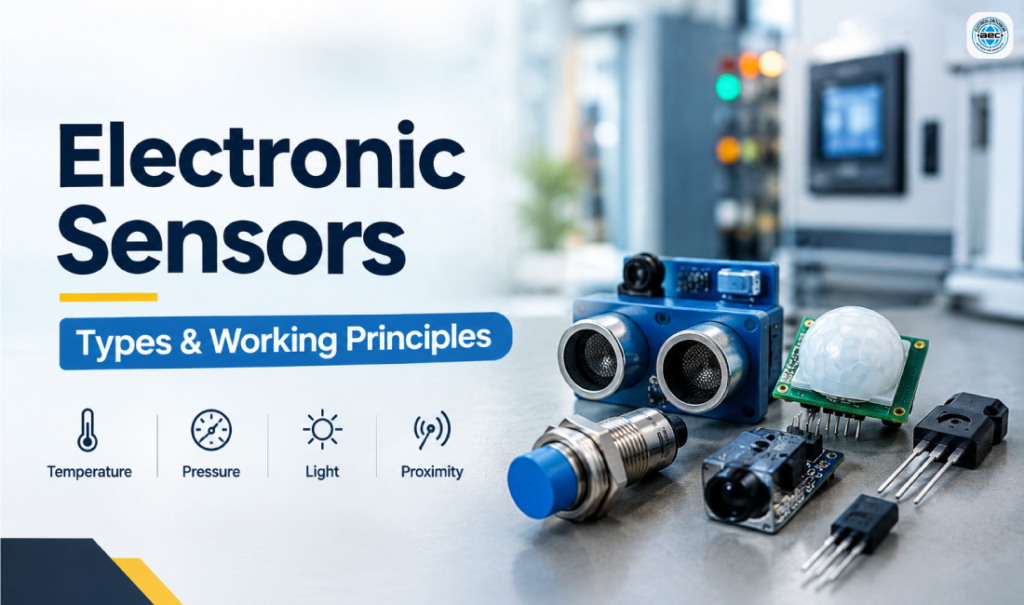
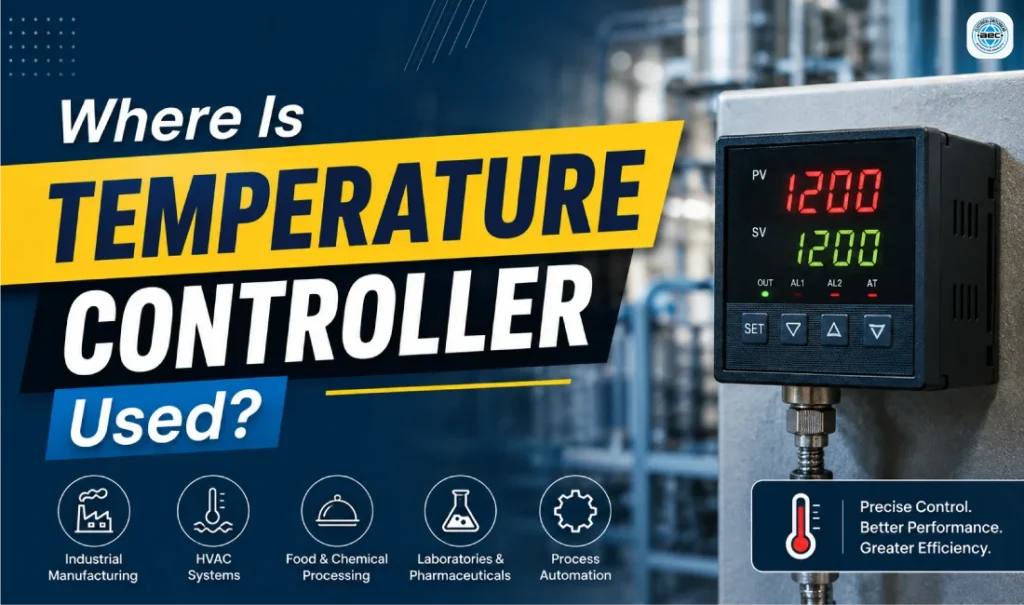
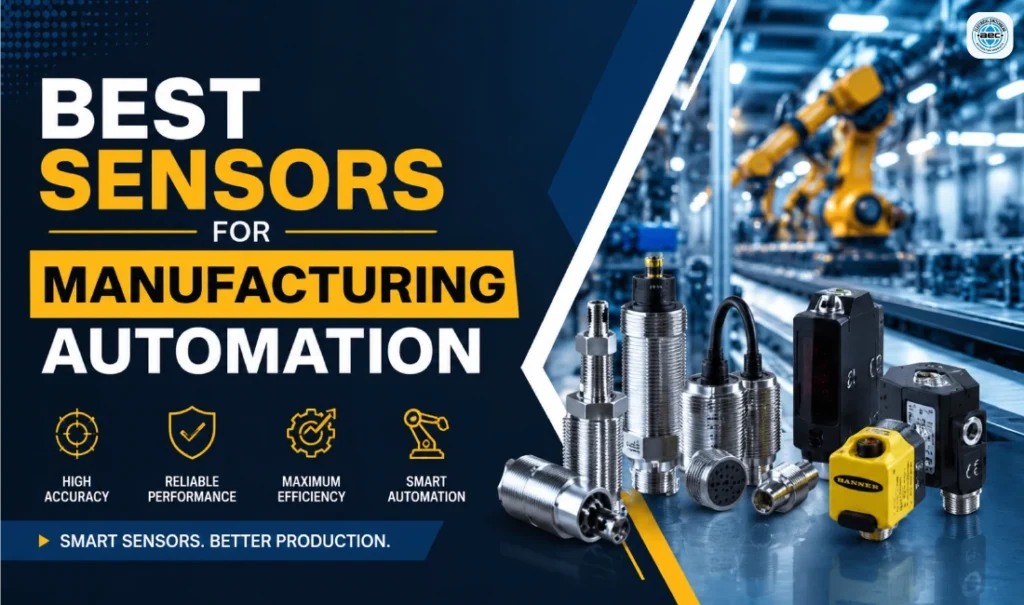
Smart manufacturing combines several technologies to create more connected and intelligent production environments. IIoT connects machines and industrial devices so operational information can be collected and exchanged. Artificial intelligence and machine learning can analyze production data and identify patterns or unusual behavior. Robotics can automate repetitive physical operations, while digital twins can represent physical machines or processes digitally for monitoring and simulation. Oracle identifies IIoT, AI and machine learning, robotics, analytics, and digital twins as important technologies contributing to smart manufacturing. (oracle.com) Among these technologies, industrial sensors remain extremely important because they provide information from the physical production environment. Without accurate sensing, connected systems cannot obtain reliable information about machines and processes. Aarcee Electrical Controls offers several sensor categories, including proximity sensors, photoelectric sensors, cylindrical photoelectric sensors, photo micro sensors, small-diameter proximity sensors, and square photoelectric sensors. (aarceeelectrical.com) Rotary encoders can provide feedback related to rotational movement, position, or speed. Temperature controllers can help maintain process temperatures, while counters and timers can support production sequencing and event monitoring. EOCR products can provide motor protection, while signal isolators can help manage electrical signals within industrial control systems. The combination of these technologies creates a powerful manufacturing ecosystem in which physical equipment can generate information, automation systems can respond, and digital technologies can analyze the resulting data.
How Industrial Sensors Improve Factory Automation
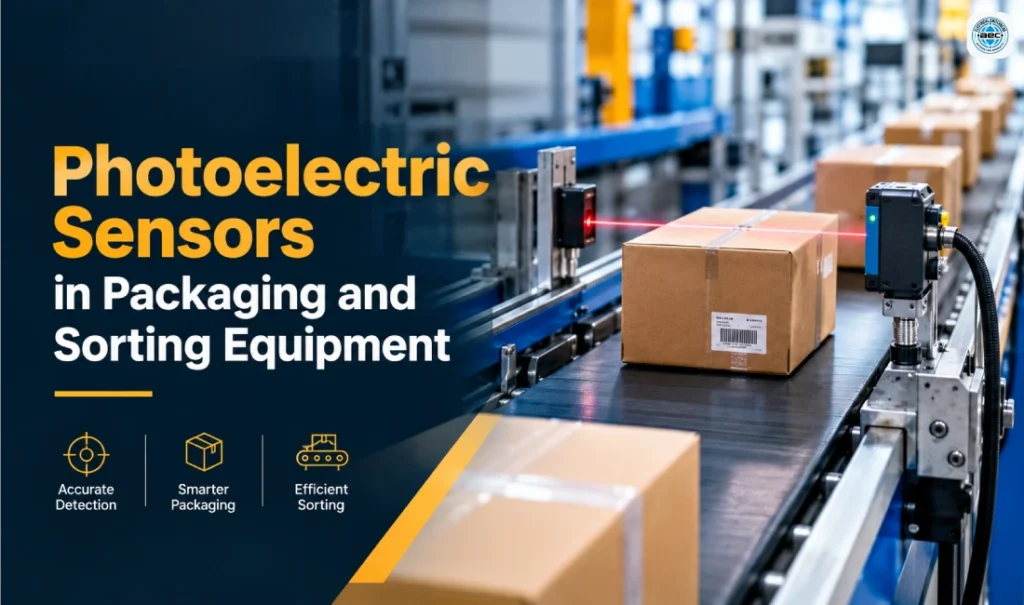
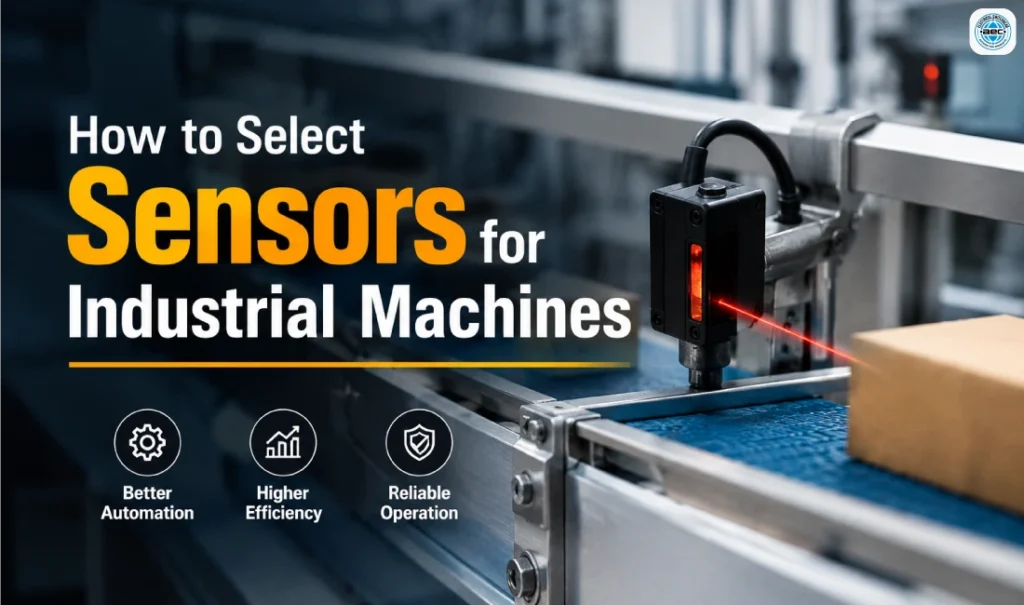
Sensors are one of the most important building blocks of Industrial Automation because machines need accurate information before they can respond automatically. Depending on the application, sensors can detect the presence, position, movement, or other characteristics of objects and processes. This allows automated machinery to perform operations based on actual conditions instead of relying entirely on manual intervention. Proximity sensors are widely used for non-contact object detection and can be useful in conveyors, packaging systems, assembly equipment, material handling, and machine positioning applications. Photoelectric sensors can also detect objects using light-based sensing and are suitable for various industrial applications. Aarcee Electrical Controls lists multiple industrial sensor categories within its automation product portfolio. (aarceeelectrical.com) The company also lists Omron automation products such as the E2B-M30LN20-WP-C1 2M proximity sensor. (aarceeelectrical.com) The right sensor should always be selected according to the application. Factors such as sensing distance, object type, installation conditions, environmental exposure, operating temperature, electrical specifications, and machine design can influence product selection. In a smart factory, sensor information can be used for much more than basic object detection. Data from sensors can contribute to production counting, machine monitoring, process control, positioning, troubleshooting, and maintenance analysis. Reliable sensing therefore provides the foundation for both immediate machine control and broader manufacturing intelligence.
The Role of Rotary Encoders in Industrial Automation
Rotary encoders are important feedback devices used in many automated machines where rotational movement, position, or speed needs to be monitored accurately. Manufacturing equipment often requires controlled movement, particularly in conveyors, packaging machinery, printing equipment, material handling systems, and automated positioning applications. An encoder can provide feedback that helps a control system understand how a rotating component or machine mechanism is moving. Without appropriate feedback, a machine may not know whether an expected movement has actually occurred. This can lead to positioning errors, inconsistent production cycles, or process interruptions. Aarcee Electrical Controls includes rotary encoders within its Industrial Automation product range and lists Omron encoder products for industrial applications. (aarceeelectrical.com) Encoders can also contribute to machine monitoring. When movement information is recorded consistently, engineers can compare expected machine behavior with actual performance and investigate unusual changes. This type of feedback becomes increasingly valuable as manufacturers adopt connected production systems. A rotary encoder may therefore serve two purposes: supporting immediate machine control and providing useful operational information for broader monitoring systems. This demonstrates that modern smart factories still depend heavily on reliable physical automation components.
Predictive Maintenance and Reduced Downtime
One of the major benefits of connected Industrial Automation is its ability to support better maintenance strategies. Traditional reactive maintenance waits until equipment fails before taking action, while preventive maintenance often follows a fixed schedule. Predictive maintenance uses equipment information to identify changes that may indicate developing problems and allows maintenance teams to investigate before a major failure occurs. Industrial sensors and monitoring devices can provide information about operating conditions such as temperature, machine cycles, position, movement, electrical conditions, and other measurable parameters. When this information is monitored over time, unusual changes may become easier to identify. For example, if a machine normally operates within a specific temperature range but begins showing a consistent increase, maintenance teams may investigate the reason before the equipment experiences a serious failure. Predictive maintenance is especially valuable for production environments where unexpected downtime can affect multiple machines or processes. Connected monitoring can also help maintenance teams prioritize their work. Instead of inspecting every machine with the same frequency, they can focus attention on equipment showing signs of abnormal behavior. Oracle identifies predictive maintenance as an important application of smart manufacturing because connected operational data can help manufacturers monitor equipment and identify potential maintenance requirements. (oracle.com) The goal is simple: identify problems earlier, plan maintenance more effectively, and reduce avoidable production interruptions.
Artificial Intelligence and Machine Learning in Manufacturing
Artificial intelligence and machine learning can help manufacturers make better use of the large volumes of information generated by automated production systems. Machines may generate thousands of operational readings, but reviewing all this information manually is difficult. Analytical technologies can identify patterns, anomalies, and relationships that may be difficult to recognize through traditional monitoring. For example, a manufacturing system may continuously record temperature, production cycles, equipment status, and other operating information. If the system detects that several parameters are gradually moving away from their normal patterns, it can help engineers investigate the underlying cause. AI can support applications such as predictive maintenance, quality monitoring, production optimization, anomaly detection, and process analysis. However, AI depends on reliable data. If sensors or other industrial components provide inaccurate information, the resulting analysis may also be unreliable. This is why dependable Industrial Automation products remain essential even when manufacturers introduce advanced analytics. Aarcee Electrical Controls supplies sensors, encoders, temperature controllers, counters, timers, EOCR, and signal isolators that can contribute to the data and control infrastructure used by industrial systems. (aarceeelectrical.com) AI should therefore be viewed as an additional intelligence layer working on top of a reliable automation foundation.
Digital Twins and Connected Manufacturing
Digital twins are becoming increasingly relevant to advanced manufacturing because they allow businesses to create digital representations of physical machines, production lines, or manufacturing processes. These digital models can use information from real equipment to support monitoring, simulation, analysis, and optimization. Manufacturers can potentially use digital twins to study production schedules, machine performance, maintenance requirements, process changes, and equipment behavior before implementing certain changes in the physical environment. For example, an engineering team may want to understand how a change in production scheduling could affect machine utilization. A digital model can help evaluate different scenarios and identify possible bottlenecks. Digital twins can also support maintenance planning by providing a more detailed representation of equipment behavior. NIST identifies digital twins as an important technology for advanced manufacturing applications, including machine health monitoring, predictive maintenance, production scheduling, and virtual commissioning. (nist.gov) However, digital models depend on accurate information from physical systems. This again highlights the importance of Industrial Automation, because sensors, encoders, controllers, and other components provide much of the real-world information needed by connected manufacturing systems. As smart factories develop, physical automation and digital technologies will increasingly work together.
Major Benefits of Industrial Automation for Manufacturers
The benefits of Industrial Automation extend beyond reducing manual work. A properly designed automation system can improve production speed, process consistency, equipment visibility, product quality, safety, and maintenance planning. Smart manufacturing adds connectivity and analytics to these capabilities, allowing businesses to use operational information more effectively. One major advantage is improved productivity. Automated equipment can perform repetitive processes consistently and at predictable speeds. Automation can also improve process consistency because machines can follow defined operating parameters without the variation that may occur during repetitive manual operations. Reduced downtime is another important benefit. When equipment conditions are continuously monitored, abnormal behavior can potentially be detected earlier. Automation can also contribute to improved product quality by maintaining consistent process parameters and detecting certain production deviations. Better process control may reduce material waste because problems can be identified earlier before large quantities of material are affected. Workplace safety can also benefit when automation reduces unnecessary exposure to repetitive or potentially hazardous tasks, although proper machine safety systems and engineering practices remain essential. Finally, connected automation provides better production visibility, helping managers and engineers understand equipment performance and identify opportunities for improvement.
Aarcee Electrical Controls for Industrial Automation
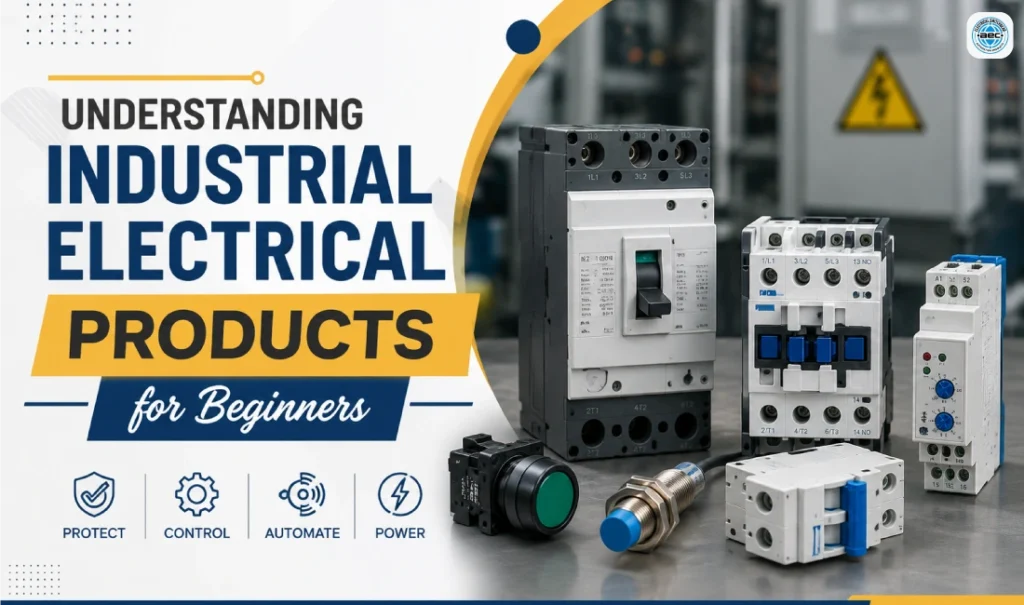
Reliable components are essential for building dependable industrial automation systems. Manufacturers, OEMs, panel builders, contractors, and automation integrators need products that match the electrical, mechanical, environmental, and operational requirements of their applications. Aarcee Electrical Controls provides a broad portfolio of industrial electrical and automation products for these requirements. (aarceeelectrical.com) Its Industrial Automation range includes proximity sensors, photoelectric sensors, rotary encoders, temperature controllers, counters, timers, EOCR, and signal isolators. (aarceeelectrical.com) The wider product portfolio also includes industrial relays, control relays, safety relays, solid-state relays, contactors, MCBs, SMPS, flexible wires, PVC ducts, junction boxes, terminal boxes, and other industrial electrical products. Aarcee Electrical Controls works with established brands including Omron Automation, BCH Electric, KEI Industries, Rishabh Instruments, Salzer Electronics, and Socomec. (aarceeelectrical.com) The company has been operating since 2006 and serves manufacturers, OEMs, panel builders, automation integrators, contractors, and industrial customers across India. (aarceeelectrical.com) For businesses developing or upgrading automated machines, the right components can help create reliable sensing, control, protection, and monitoring systems. You can explore the Industrial Automation products from Aarcee Electrical Controls for industrial sensing, control, protection, and automation requirements.
How Manufacturers Can Start Their Smart Manufacturing Journey
Manufacturers do not necessarily need to transform an entire factory at once. A practical approach is to identify a specific production problem and introduce Industrial Automation where it can provide a measurable improvement. This could involve one machine, one repetitive operation, one production line, or one monitoring requirement. The first step is identifying the problem. Common areas include frequent machine breakdowns, repetitive manual work, inconsistent production quality, high inspection requirements, material waste, or limited production visibility. The next step is determining what information is needed. A proximity sensor may be required for object detection, while a rotary encoder may be appropriate for movement feedback. Temperature controllers can support temperature-sensitive processes, while timers and counters can manage sequences and production events. Manufacturers should then select suitable control and protection components according to the machine’s technical requirements. After implementation, performance should be measured using relevant indicators such as production output, downtime, rejection rate, cycle time, maintenance frequency, or other application-specific metrics. If the automation project delivers measurable results, the same approach can be expanded to other machines or production areas. This gradual approach allows businesses to adopt smart manufacturing according to their actual requirements and available resources. The objective should always be practical: solve a manufacturing problem first, then expand automation where it creates additional value.
Conclusion
Smart manufacturing is changing how factories monitor equipment, control production, manage maintenance, and improve operational efficiency. At the center of this transformation is Industrial Automation, which provides the sensing, control, feedback, protection, and monitoring capabilities required for modern production environments. Technologies such as IIoT, artificial intelligence, machine learning, robotics, analytics, and digital twins are making manufacturing systems more connected and data-driven. However, these technologies still depend on reliable information from physical machines and industrial components. Proximity sensors, photoelectric sensors, rotary encoders, temperature controllers, timers, counters, EOCR, signal isolators, relays, power supplies, and other electrical products can all contribute to an effective automation infrastructure. Aarcee Electrical Controls provides a broad range of industrial automation and electrical products for manufacturers, OEMs, panel builders, contractors, and automation professionals across India. (aarceeelectrical.com) For businesses planning their next automation project, the best approach is to identify a clear production challenge, select suitable components, implement the solution carefully, measure the results, and expand gradually. The future of manufacturing is not simply about replacing people with machines. It is about creating connected production environments where people, machines, automation systems, and data work together more effectively. With the right automation infrastructure and reliable industrial components, manufacturers can take practical steps toward better productivity, improved process control, reduced downtime, and smarter manufacturing operations.
FAQs
Have questions? We’ve answered some of the most common queries to help you understand the topic better.
Q1. What is Industrial Automation?
Industrial Automation uses sensors, control systems, and machines to automate industrial processes with less manual intervention.
Q2. How does Industrial Automation improve manufacturing?
It helps improve productivity, process accuracy, quality, safety, and equipment performance while reducing downtime.
Q3. What products are used in Industrial Automation?
Common products include proximity sensors, photoelectric sensors, rotary encoders, timers, counters, temperature controllers, EOCR, and signal isolators.
Q4. Can Industrial Automation reduce downtime?
Yes. Automated monitoring can identify abnormal equipment conditions early and support predictive maintenance.
Q5. Where can I buy Industrial Automation products in India?
Aarcee Electrical Controls supplies Industrial Automation and industrial electrical products for manufacturers, OEMs, and automation professionals across India.